
UK Barrister Faces Possible Prison Time Over Volunteer River Cleanup
A British barrister who organized a volunteer effort to clear a polluted river tributary is now facing a government investigation that could carry up to two years in prison, not for polluting the waterway, but for cleaning it up without a permit.
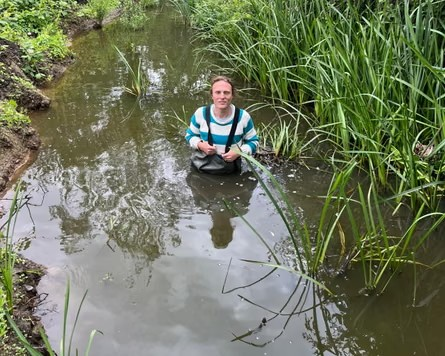
Paul Powlesland, 40, a barrister at Garden Court Chambers who lives on a narrowboat along the River Roding, helped lead the cleanup of Alders Brook, a tributary that runs through the Barking area on the Essex-London border. In late February 2026, Powlesland and a team from the River Roding Trust, a community organization he founded and spent ten days clearing debris from roughly 250 meters of the brook. The group used manual labor along with a hired digger that cost volunteers around 1,000 pounds.
The targeted section of the brook had become choked with rubbish, branches, silt, and invasive weeds, leaving the water stagnant and ecologically degraded. According to MyLondon, the volunteers removed packaging, needles, domestic appliances, and even weapons from the river. In total, the group hauled out more than 200 bags of rubbish from the site.
Powlesland had spent several years repeatedly asking the Environment Agency to address pollution and litter problems in the river system, including upstream sewage discharges from Thames Water and fly-tipping by others. When official action did not materialize, his group stepped in as part of broader community restoration work that had already included smaller cleanups and tree planting over the previous five years.
The response from regulators came quickly. Within one week of the cleanup’s completion, Environment Agency investigators visited the site, and by mid-March 2026, Powlesland had received formal notification that he was under investigation.
The Environment Agency sent Powlesland a letter stating he was being investigated for carrying out unpermitted work, writing: “We consider that unpermitted works have taken place … in contravention of the Environmental Permitting (England and Wales) Regulations 2016.” Officials described the activities as a potential “flood risk activity” because they involved intervention in the riverbed and floodplain, stating that permits are required to ensure such work does not cause unintended harm to flood defenses, drainage systems, or protected habitats.
Powlesland was notified that the site is under investigation for both permitting and waste-related offences, with the maximum penalty for the primary offence being up to two years in prison. As of June 20, 2026, no charges had been formally filed, and the matter remained at the investigation stage. The Environment Agency has since clarified, according to the Local Government Lawyer, that “no decision has been made on prosecution” and that it is investigating the unpermitted works to ensure activity around waterways is properly assessed.
For Powlesland, the ecological results have spoken for themselves. Local observers and Powlesland himself reported the return of wildlife, including fish, dragonflies, herons, irises, and reed beds. “The section of the river which was cleared is really coming back beautifully, wildlife is returning, yet we are being threatened with prosecution,” he said.
He has been sharply critical of what he sees as misplaced regulatory priorities. “After decades of ignoring rampant environmental crime on the Roding, the Environment Agency has finally decided to act,” he said. “But it’s not action against Thames Water [utility company] for dumping billions of litres of sewage in the Roding, or the waste criminals who have dumped thousands of tonnes of rubbish on its banks, but against the River Roding Trust for” doing the cleanup work itself.
Powlesland has also criticized the agency for targeting volunteers rather than focusing on sewage discharges and illegal dumping affecting the waterway.
Thames Water, whose sewage discharges into the Roding system Powlesland has long criticized, defended its operations. The company said its Combined Sewer Outfalls on the River Roding operate within limits set by the Environment Agency and are a legally permitted part of the wastewater system.
For its part, the Environment Agency has pushed back on the characterization that it is punishing good-faith conservation work. In a statement, the agency said it “deeply” cares about protecting the River Roding and is willing to work with partners who want to improve the local environment. “However, governance and expert advice is necessary to make sure that work does not cause unintended harm, to flood risk, drainage or the wider environment,” the agency said.
As of this writing, the investigation remains ongoing, with no formal charges yet filed against Powlesland or the River Roding Trust.