The Fulia (Shantipur) Saree Of West Bengal
Not every great weaving town in India grew organically over centuries in one place. Fulia (also spelled Phulia), a modest town in West Bengal’s Nadia district, owes its status as one of Bengal’s finest handloom centres to a moment of upheaval the mass displacement of weavers during the Partition of India in 1947, that turned a village neighbouring Shantipur into a hub recognised today for some of the finest Tant and Tangail sarees produced anywhere in Bengal.
Displacement That Built a Tradition
Before Partition, the finest Tangail-style weaving belonged to the Basak community, a Hindu weaving lineage based in the Tangail district of what was then East Bengal (now Bangladesh), along with weavers originally from Dhamrai and Chauhatta in the Dhaka district. The Basak families guarded their weaving techniques closely, keeping the craft within the family rather than training outside labourers.
Partition changed that. As communal violence, rising costs, and the loss of government support made life increasingly difficult for Hindu weavers in East Pakistan, large numbers migrated to West Bengal, a process that intensified in 1965 and reached its peak during the 1971 Bangladesh Liberation War. Many of these displaced weavers settled in Fulia, a town neighbouring the older weaving centre of Shantipur, along with nearby Samudragarh and Dhatrigram in Burdwan district. Some initially worked as labourers in local Shantipur looms, and worked with local weavers in refugee camps and government-supported resettlement schemes before re-establishing their ancestral craft independently.
The Birth of “Fulia Tangail”
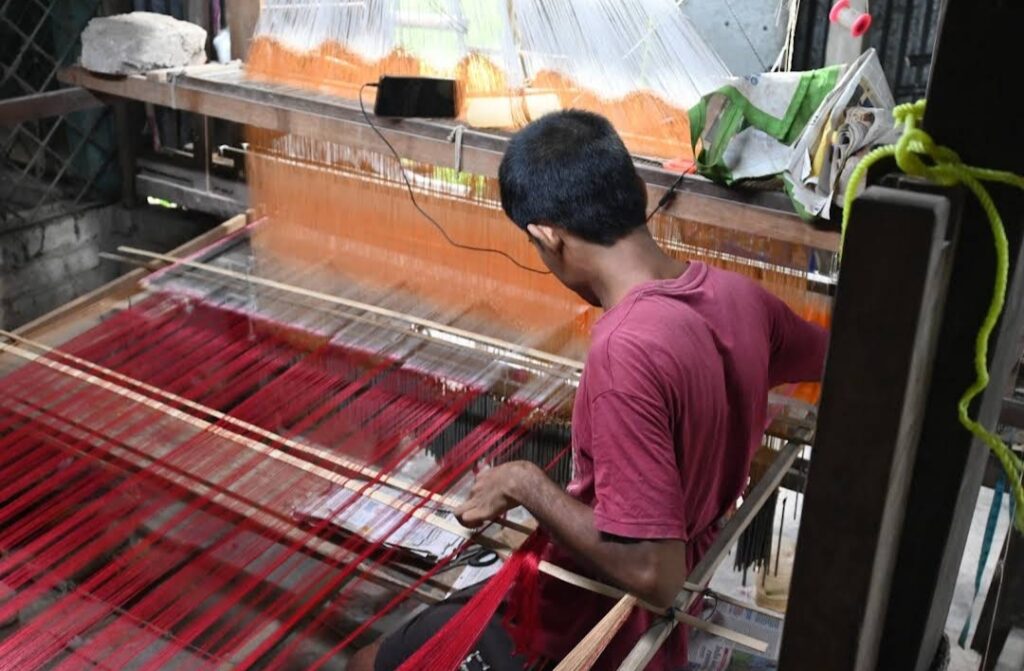
What emerged from this resettlement was something genuinely new: a fusion style that came to be known as Fulia Tangail. Basak weavers gradually blended the Dhaka-Tangail weaving style they had carried with them with the existing Shantipuri loom techniques of their new home, producing a saree distinct from both its parent traditions, a genuinely hybrid textile born directly out of displacement and resettlement.
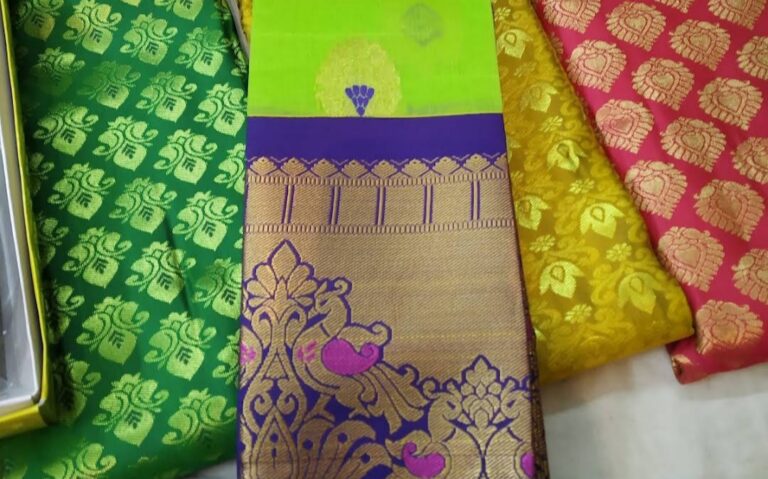
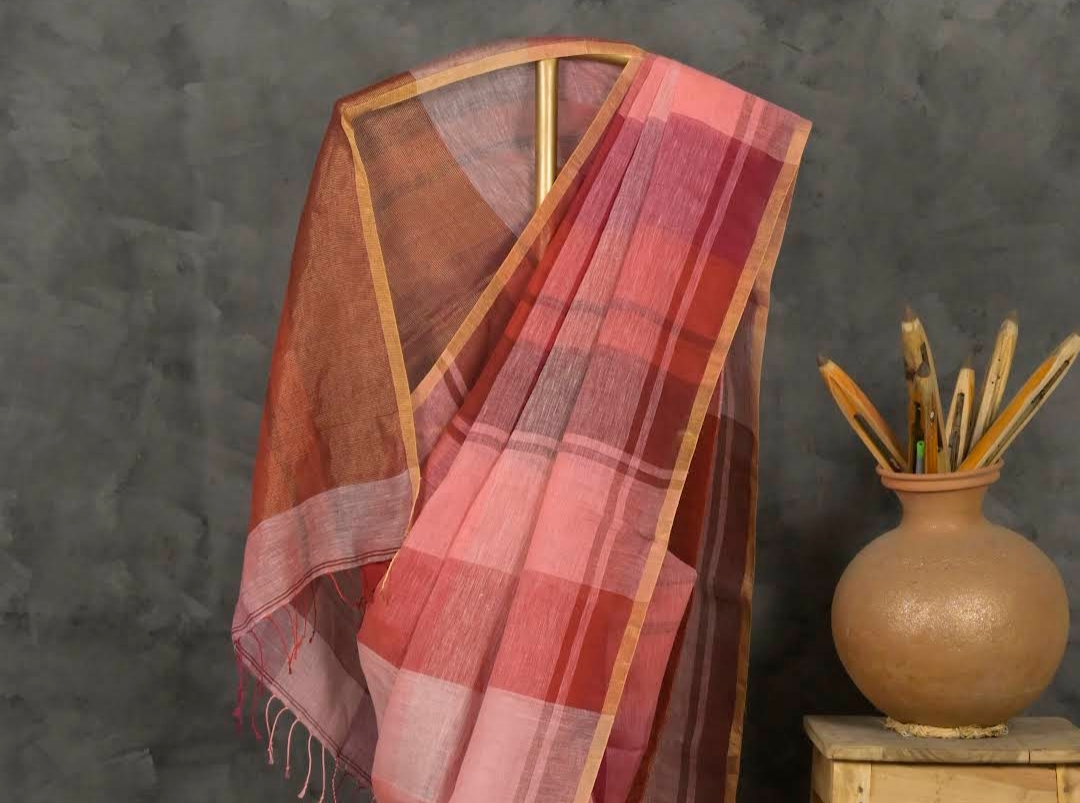
The result is widely regarded as among the finest quality Tant produced in Bengal today: soft, fine in texture, available in vibrant colours, and known for large, intricately woven motifs achieved using extra-weft and jacquard techniques. A Fulia Tangail saree is generally recognisable by its plain or lightly patterned earthy-coloured body, contrasted against a texture that looks coarse but feels remarkably soft and fine to the touch, a direct result of the hand-weaving process. Unlike the true Dhakai jamdani, Fulia Tangail motifs tend to be more spaced out and less densely figurative, though the weaving technique that produces them is closely related.
Design Vocabulary
Fulia’s Tangail weavers developed (or inherited) an extensive vocabulary of named motifs and border patterns, each describing a specific visual effect: designs such as Megho Dombur, Mayur Pekham (peacock feather), Ashman Tara (sky star), Sanja Phool, Padma (lotus), and Belpata appear across the body and pallu, while border and shaft patterns include Beki, Bhomra (bumblebee), Taaj (crown), and Danth (teeth-like edges). Complete saree styles carry their own traditional names too, Begam Bahar, Ganga-Jamuna, Ayna Khupi, and Anarkoli among them, reflecting a design tradition passed down and adapted through generations of Basak weavers even as they rebuilt it on new soil.
How a Fulia Saree Is Made
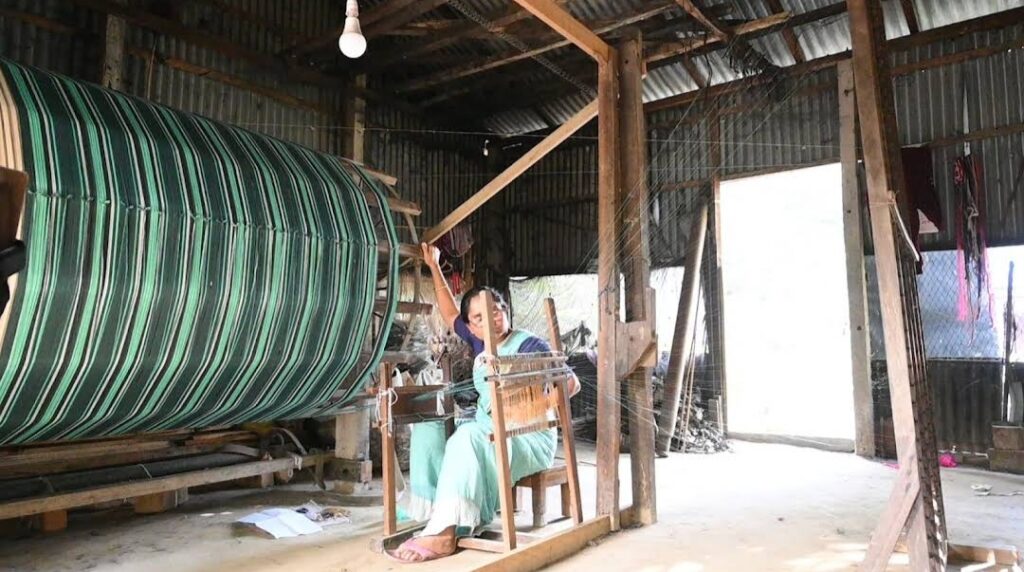
The process begins, as with all Tant weaving, by washing raw cotton yarn to remove impurities, then bleaching, dyeing, and starching it before it’s wound onto bobbins for the loom. Weaving itself happens on a handloom, often fitted with a jacquard attachment for the more elaborate Tangail-style motifs, and can take anywhere from a single day for a simpler design to around three weeks for particularly intricate, densely patterned pieces.
A distinctive final touch marks Fulia-Shantipur weaving specifically: before the finished cloth is taken off the loom frame, the weaver applies a size paste, traditionally made from sago or popped rice by hand across the fabric, giving it extra lustre and a crisp finish straight off the loom. Weavers traditionally work long hours, often 14 to 16 hours a day, in small tin-shed workshops housing just four or five looms, a scale of production that has changed little even as Fulia’s reputation has grown nationally.
A Town Reshaped by History, Sustained by Craft
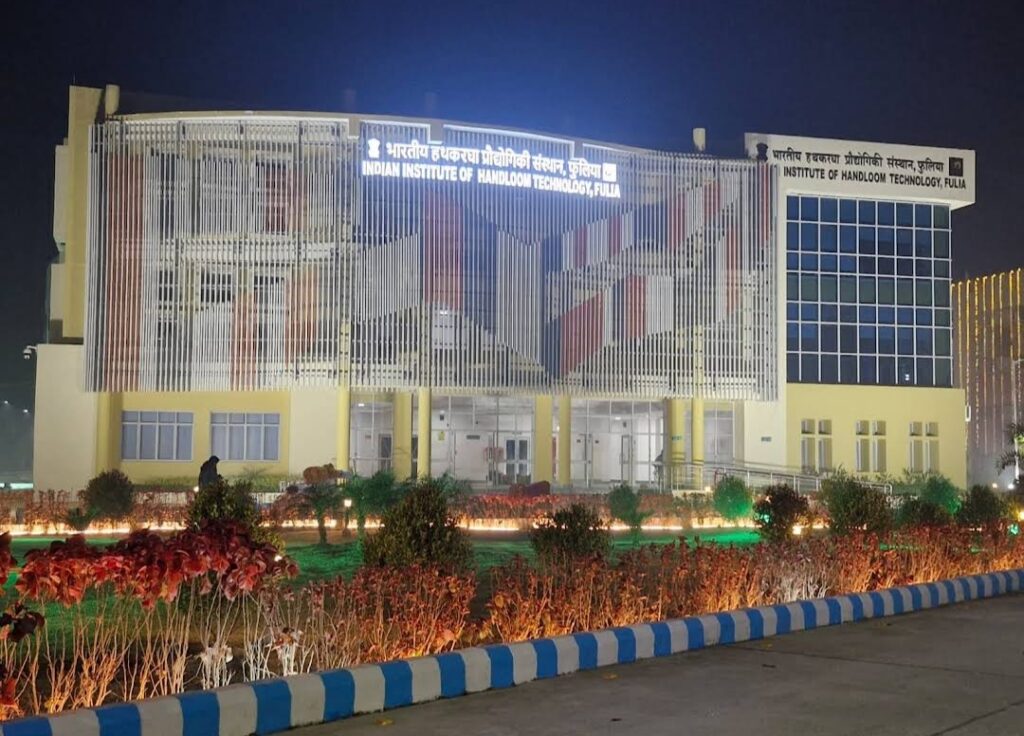
Today, Fulia sits alongside Shantipur as one of the two central pillars of West Bengal’s cotton-weaving economy, and its handloom sarees have found markets well beyond Bengal, drawing buyers and tourists specifically to the town for its Tant, Tangail, and jamdani weaves. The broader Tangail weaving tradition carried forward by descendants of the same Basak lineage that resettled in Fulia, received a Geographical Indication tag as “Tangail Saree of Bengal” in 2024, and was recognised by UNESCO as Intangible Cultural Heritage in 2025.
To wear a genuine Fulia Tangail saree is to wear something built quite literally out of resilience: a craft carried across a newly drawn border by families who refused to let displacement mean the end of a tradition, and who instead used it to create something new, a style now considered among the very best that Bengal’s looms produce.