Woolly Dogs Of The Pacific Northwest Coast
The woolly dogs of the Pacific Northwest Coast represent one of the most fascinating and unique chapters in the history of human-animal relationships in the Americas.
For thousands of years, the Coast Salish peoples, Indigenous nations including groups like the Cowichan, Musqueam, Squamish, Skokomish, and many others in what is now Washington state, British Columbia, and around the Salish Sea, bred and tended a special breed of dog specifically for its thick, soft undercoat.
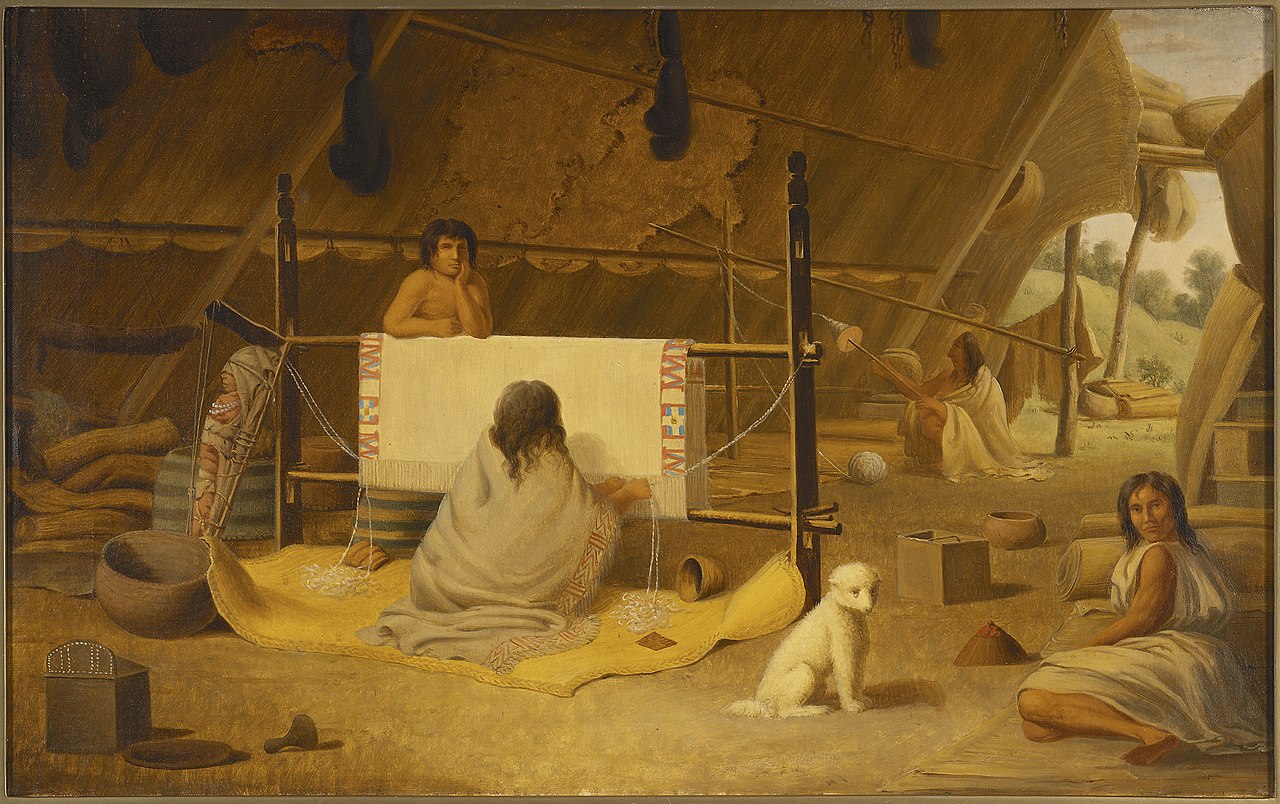
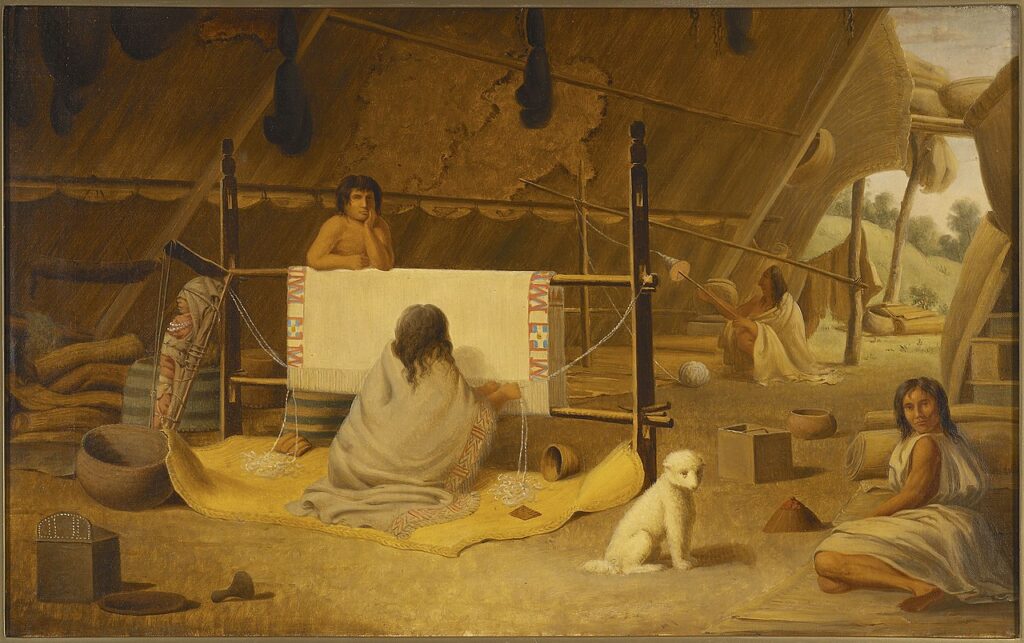
This “wool” was sheared, spun into yarn, and woven into blankets, robes, and ceremonial textiles that were both practical in the region’s damp, chilly climate and deeply significant culturally and economically.
Archaeological evidence shows dog remains matching the woolly type dating back around 5,000 years in Coastal Salish territories, with roots likely tracing to dogs that accompanied the first peoples migrating into the Americas from Eurasia via Beringia over 15,000 years ago.
Over millennia, Coast Salish communities selectively bred these dogs for their distinctive long, white (or light) woolly fur, dense, crimpy, and excellent for spinning and dyeing. Unlike village dogs used for hunting or guarding, or larger working dogs, woolly dogs (known in various Coast Salish languages as sqwemá:y, ske’-ha, sqwǝméy̓, or similar terms) were a distinct lineage deliberately kept separate to preserve the quality of their fleece.
These small-to-medium Spitz-type dogs, often described as resembling larger Pomeranians, with pricked ears, curled tails, fox-like faces, and a howl rather than a bark, were raised in packs of 12–20. Women typically managed them, paddling canoes to small rocky islands or keeping them in pens to isolate them from other dogs and prevent interbreeding.
They were fed a rich diet, often including salmon and other marine foods (though some accounts note careful avoidance of certain fish parasites for puppies), ensuring healthy coats.
Were They Expensive?
Woolly dog hair was a prized fiber, often blended with mountain goat wool (gathered from wild animals or shed fur) to create luxurious textiles. Blankets made from dog wool were warm, lightweight, and highly valued, stored in cedar boxes, used in potlatches as symbols of wealth and status, and passed down as heirlooms. High-ranking families, especially women in some communities, owned and inherited these dogs, underscoring their role in matrilineal traditions.
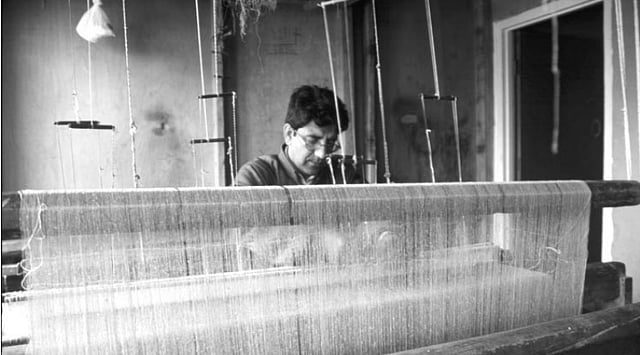
Oral histories from Coast Salish Elders, Knowledge Keepers, and master weavers describe the dogs with reverence: they were family members, emblems of community identity, and even featured in mythology and art, such as 19th-century baskets depicting them. Weaving with dog wool was a skilled, time-intensive art form central to Coast Salish identity.
Early European explorers like Captain George Vancouver in 1792 noted the dogs’ compact fleeces, which could be lifted by a corner without separating, and their isolation on islands.
The sole confirmed physical remnant is the pelt of a woolly dog named Mutton, who lived in the 1850s and died around 1859. Cared for by ethnographer George Gibbs during the Northwest Boundary Survey, Mutton’s fur and bones are preserved at the Smithsonian Institution.
Recent genomic studies (published in 2023 in Science) analyzed Mutton’s DNA alongside Indigenous knowledge, revealing that about 85% of his ancestry traced to pre-colonial North American dogs, making him a rare survivor of Indigenous lineage well after European contact. The research confirmed unique genetic traits for the woolly coat and showed efforts by Coast Salish communities to maintain pure lines despite incoming European breeds.
The woolly dog tradition began fading in the 19th century. European settlement brought introduced dog breeds that interbred with woolly dogs, diluting the specialized traits. By the mid-to-late 1800s, the practice had largely ceased, with the breed going extinct around the turn of the 20th century (some reports suggest the last known individual died as late as 1940). The loss was tied directly to broader impacts of colonialism on Coast Salish lifeways.
Today, woolly dogs live on through oral histories, museum artifacts (rare blankets with confirmed dog hair exist, like one at the Burke Museum), and collaborative research blending Western science with Indigenous Traditional Knowledge. Master weavers and community members continue reviving Salish weaving arts, often using mountain goat or other fibers, while honoring the woolly dog’s memory.