Traditional Clothing Of Rajasthan
Rajasthan, known as the “Land of Kings,” boasts one of India’s most vibrant and colorful traditional clothing traditions. The attire reflects the state’s desert climate, royal heritage, and rich craftsmanship, featuring bright hues, intricate embroidery, mirror work (gotta patti), and iconic textile techniques like Bandhej (tie-dye), Leheriya (wave patterns), and block printing. These garments provide protection from the harsh sun while symbolizing pride, identity, and festivity, especially during events like Teej, Gangaur, Pushkar Fair, and weddings.
Traditional Attire for Women
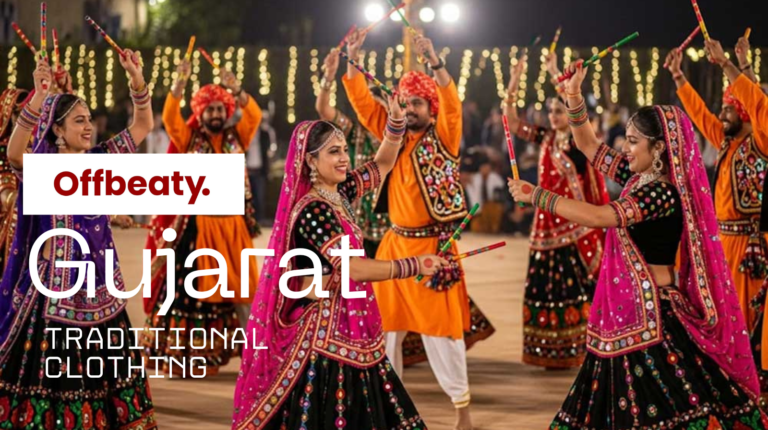
The signature outfit for Rajasthani women is the Ghagra Choli (also called Lehenga Choli or Chaniya Choli), a three-piece ensemble designed for elegance and movement:
- Ghagra/Lehenga: A long, flared, ankle-length skirt with heavy pleats, often in vibrant colors like red, yellow, orange, or green.
- Choli: A short, fitted blouse (sometimes backless or with sleeves), heavily embroidered or embellished.
- Odhni/Dupatta: A long veil draped over the head and shoulders for modesty and sun protection.
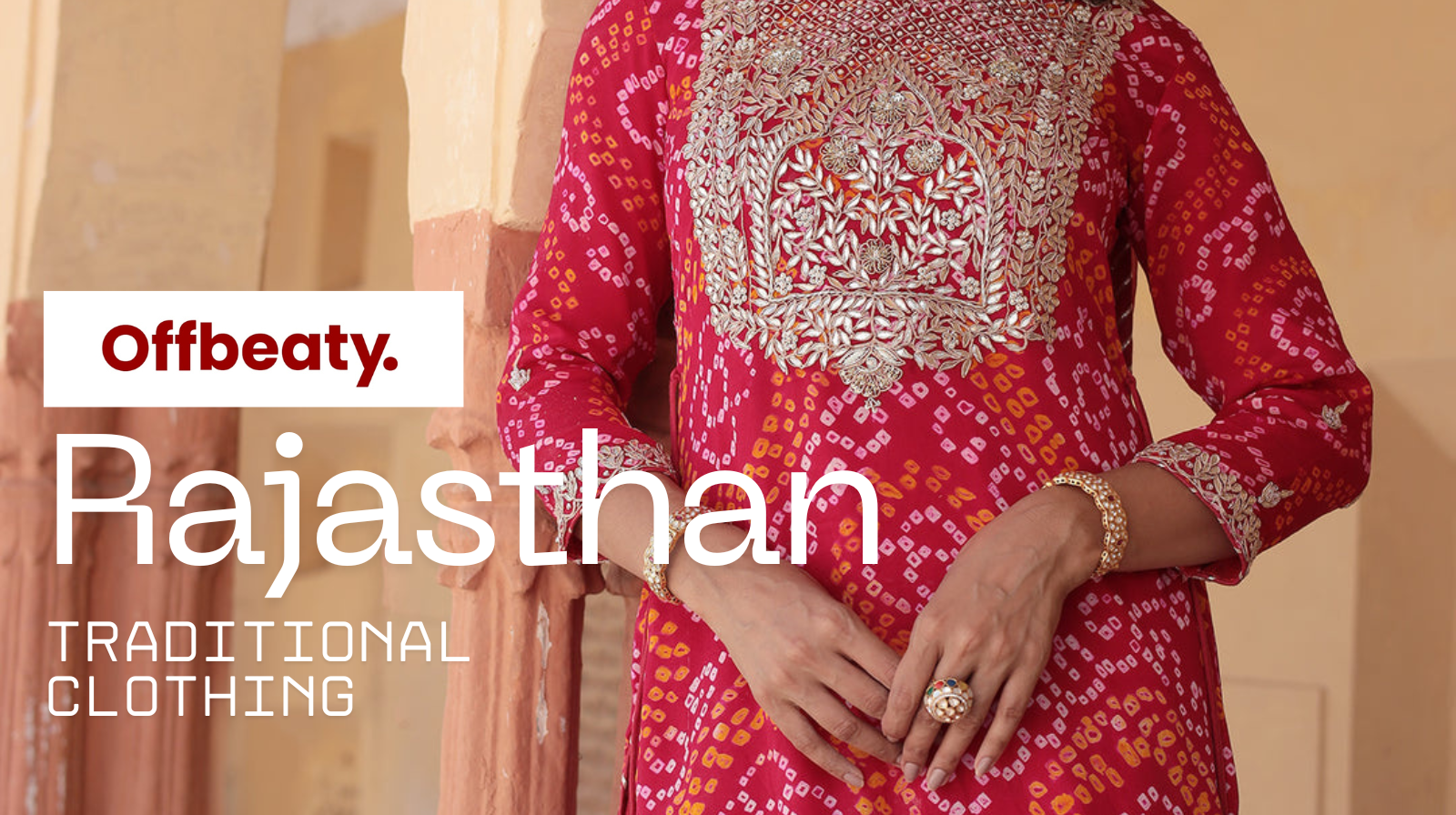
These are adorned with mirror work, gota-patti (gold/silver lace), zari embroidery, and prints like Bandhej or Leheriya. The outfits are practical for the hot climate yet regal, often paired with heavy silver or gold jewelry including maang tikka, large nose rings (nath), bangles, anklets, and necklaces.
Bandhej and Leheriya fabrics are especially famous, with dotted or wavy patterns created through resist-dyeing techniques passed down generations.
Traditional Attire for Men
Men’s traditional clothing is practical, regal, and distinctive, emphasizing comfort in the arid environment:
- Angrakha or Kurta: A long, flowing tunic (angrakha often has a wrap-around style with ties, historically worn by Rajputs).
- Dhoti or Pyjama/Churidar: A draped lower garment (dhoti) or stitched loose pants/pyjama.
- Pagdi/Safa: The iconic turban, a symbol of honor and regional identity. Made from 2-9 meters of fabric, tied in unique styles that vary by caste, region, or occasion (e.g., short and broad safas for festivals).
Turbans come in bright colors like red, saffron, or patterned Leheriya/Bandhej, often with a mustache completing the look.
Footwear and Accessories
Both men and women wear Jootis/Mojaris embroidered leather shoes (often camel or goat skin) with upturned toes, featuring mirror work or patterns for a royal touch.
Cultural Significance and Textiles
Rajasthani clothing showcases artisanal heritage: Bandhej from Jaipur and Sikar, Leheriya from Jodhpur, and mirror embroidery from regions like Barmer. These crafts support local communities and preserve traditions. While modern wear dominates daily life in cities, traditional outfits remain essential for festivals, dances (like Ghoomar), and celebrations, embodying Rajasthan’s royal splendor and vibrant spirit.