Timeline of UNESCO World Heritage Sites in India (With Short Notes)
India has 44 UNESCO World Heritage Sites as of 2026 (36 cultural, 7 natural, and 1 mixed). The country ratified the UNESCO World Heritage Convention in 1977, with the first inscriptions occurring in 1983.
Sites are inscribed during annual sessions of the World Heritage Committee, based on criteria like outstanding universal value in cultural or natural heritage. This timeline lists all sites in chronological order by year of inscription (with month/session where known for early ones).
It draws from official UNESCO records and reliable sources (e.g., whc.unesco.org, Wikipedia summaries). The most recent additions include Moidams (2024) and Maratha Military Landscapes (2025).
- 1983 (First batch, inaugural inscriptions for India):
- Ajanta Caves (Maharashtra): Buddhist rock-cut caves with exceptional paintings (cultural).
- Ellora Caves (Maharashtra): Multi-religious rock-cut temples (Buddhist, Hindu, Jain) (cultural).
- Agra Fort (Uttar Pradesh): Mughal fortress-palace complex (cultural).
- Taj Mahal (Uttar Pradesh): Iconic white-marble mausoleum built by Shah Jahan (cultural).
- 1984:
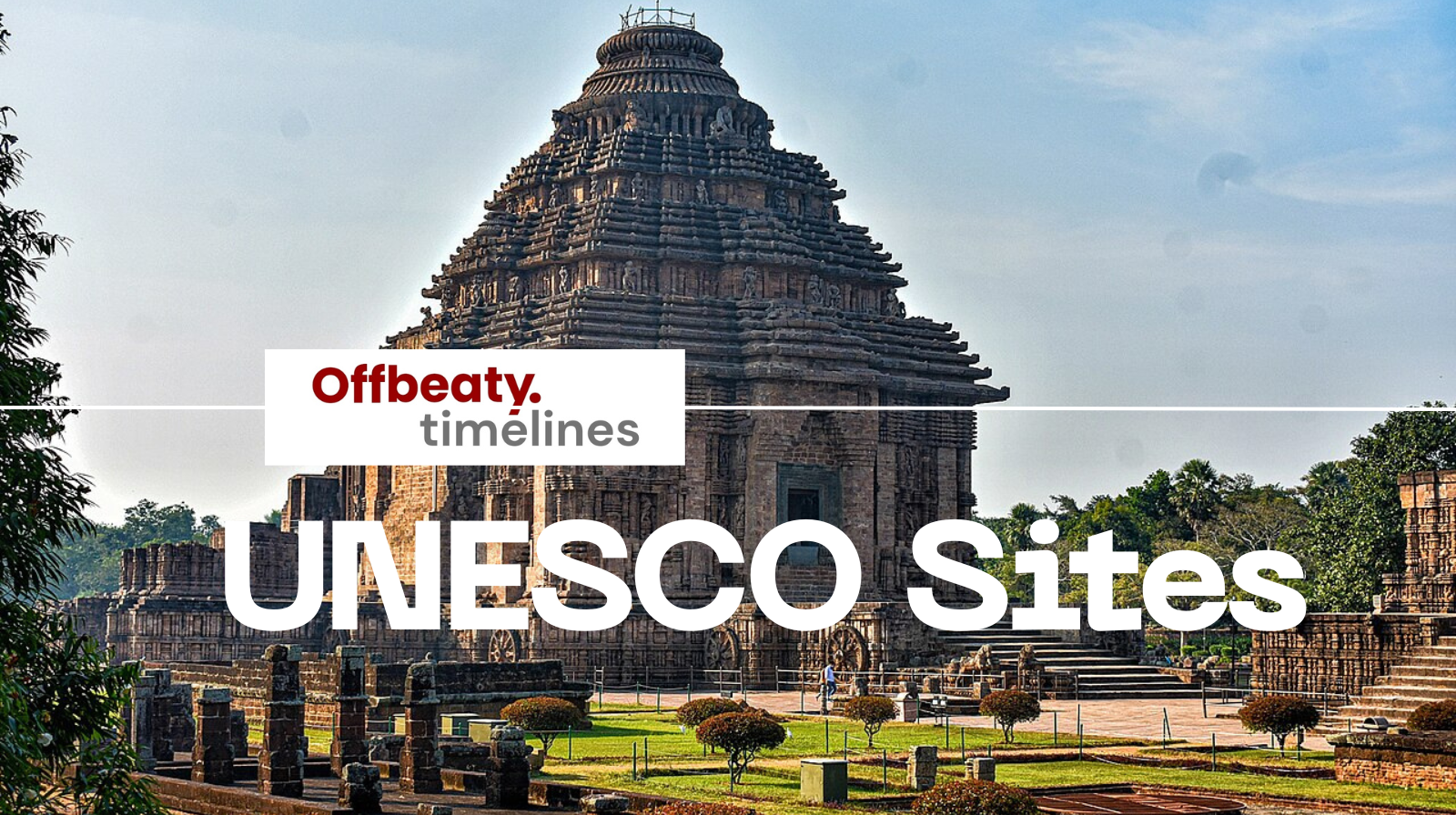
- Sun Temple, Konârak (Odisha): 13th-century chariot-shaped temple dedicated to Surya (cultural).
- Group of Monuments at Mahabalipuram (Tamil Nadu): Pallava-era rock-cut rathas, shore temple, and sculptures (cultural).
- 1985:
- Kaziranga National Park (Assam): Biodiversity hotspot for one-horned rhinoceros (natural).
- Keoladeo National Park (Rajasthan): Wetland bird sanctuary (natural).
- Manas Wildlife Sanctuary (Assam): Tiger reserve with diverse fauna (natural).
- 1986:
- Churches and Convents of Goa (Goa): Portuguese colonial architecture blending styles (cultural).
- Fatehpur Sikri (Uttar Pradesh): Akbar’s planned Mughal capital city (cultural).
- Group of Monuments at Hampi (Karnataka): Ruins of Vijayanagara Empire (cultural).
- 1987:
- Elephanta Caves (Maharashtra): Rock-cut Shaivite caves with massive sculptures (cultural).
- Great Living Chola Temples (Tamil Nadu): Brihadisvara, Gangaikondacholisvaram, and Airavatesvara temples (cultural).
- Group of Monuments at Pattadakal (Karnataka): Chalukya-era temples blending Nagara and Dravida styles (cultural).
- 1988:
- Nanda Devi and Valley of Flowers National Parks (Uttarakhand): Himalayan biodiversity (natural; Valley of Flowers added/extended 2005).
- 1989:
- Buddhist Monuments at Sanchi (Madhya Pradesh): Stupas, pillars, and gateways from Mauryan era onward (cultural).
- 1993:
- Humayun’s Tomb (Delhi): Mughal garden-tomb precursor to Taj Mahal (cultural).
- Qutb Minar and its Monuments (Delhi): Early Indo-Islamic tower and ruins (cultural).
- Mountain Railways of India (multiple: Darjeeling Himalayan, Nilgiri, Kalka-Shimla): Engineering marvels (cultural; inscribed together).
- 2003:
- Rock Shelters of Bhimbetka (Madhya Pradesh): Prehistoric rock art sites (cultural).
- 2004:
- Champaner-Pavagadh Archaeological Park (Gujarat): Hindu and Islamic ruins (cultural).
- Chhatrapati Shivaji Terminus (formerly Victoria Terminus, Mumbai, Maharashtra): Victorian Gothic railway station (cultural).
- 2005:
- Chhatrapati Shivaji Maharaj Terminus extension or related (part of earlier).
- Valley of Flowers extension (see 1988).
- 2007:
- Red Fort Complex (Delhi): Mughal fortress symbolizing power (cultural).
- 2010:
- Jantar Mantar, Jaipur (Rajasthan): Astronomical observatory (cultural).
- 2013:
- Hill Forts of Rajasthan (Rajasthan): Six forts (Chittorgarh, Kumbhalgarh, etc.) (cultural).
- 2014:
- Great Himalayan National Park Conservation Area (Himachal Pradesh): Biodiversity hotspot (natural).
- 2016:
- The Architectural Work of Le Corbusier (shared; Chandigarh’s Capitol Complex, India) (cultural).
- Archaeological Site of Nalanda Mahavihara at Nalanda, Bihar (Bihar): Ancient Buddhist university ruins (cultural).
- 2017:
- Historic City of Ahmadabad (Gujarat): Sultanate-era urban fabric (cultural).
- 2019:
- Jaipur City, Rajasthan (Pink City): Planned city with forts and palaces (cultural).
- 2021:
- Dholavira: a Harappan City (Gujarat): Major Indus Valley Civilization site (cultural).
- Kakatiya Rudreshwara (Ramappa) Temple, Telangana (Telangana): 13th-century temple with floating brick (cultural).
- 2023:
- Sacred Ensembles of the Hoysalas (Karnataka): Three Hoysala temples (cultural).
- 2024:
- Moidams: The Mound-Burial System of the Ahom Dynasty (Assam), Royal burial mounds (cultural).
- 2025:
- Maratha Military Landscapes of India (Maharashtra): Forts and military architecture of the Marathas (cultural).
India ranks sixth globally in the number of UNESCO sites. These inscriptions reflect India’s rich diversity: ancient civilizations (Indus, Mauryan), religious architecture (Buddhist, Hindu, Jain, Islamic), colonial heritage, natural ecosystems, and engineering feats.
Many sites face conservation challenges like urbanization or climate change, but they highlight India’s cultural and natural legacy.