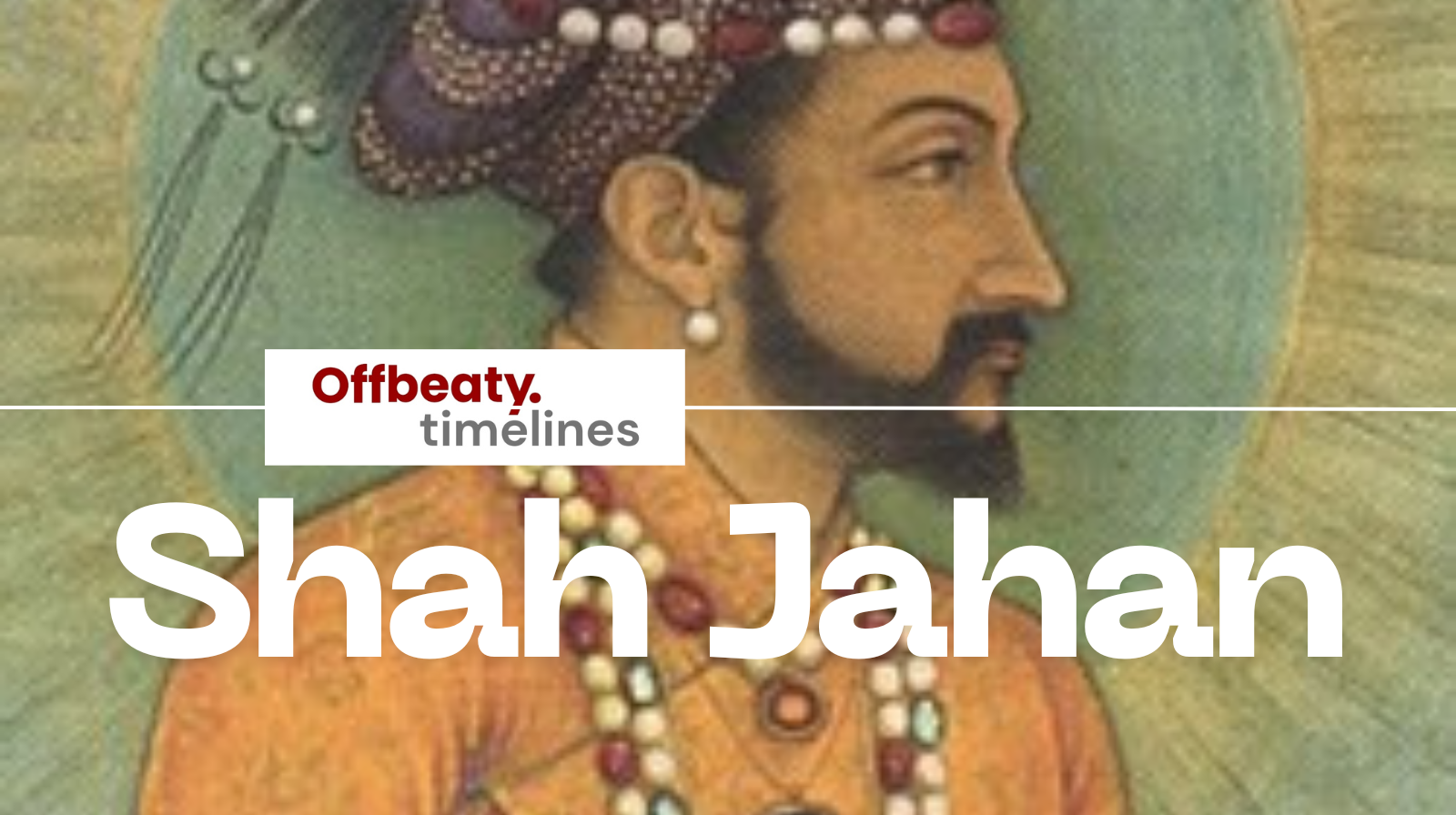
Timeline Of Shah Jahan (1592 – 1666)
Shah Jahan (born 5 January 1592 in Lahore) was the third son of Jahangir and a Rajput princess (Manmati/Jagat Gosaini). As Prince Khurram, he was a skilled military commander (earning the title “Shah Jahan” from Jahangir after Deccan successes). He rebelled against his father in 1622–1626 but reconciled.
After Jahangir’s death in 1627, he eliminated rivals (including brothers Shahryar and others) and ascended the throne in 1628. His 30-year reign (1628–1658) is often called the “Golden Age” of the Mughal Empire due to peak prosperity, architectural grandeur (especially white marble buildings), artistic patronage, and territorial consolidation. He shifted the capital to Delhi (Shahjahanabad) and built iconic monuments like the Taj Mahal (in memory of his beloved wife Mumtaz Mahal, who died in 1631).
His rule saw Deccan expansions, temporary northwest gains (lost later), and a more orthodox Islamic tilt compared to Akbar/Jahangir. The reign ended tragically with a war of succession among his sons, leading to his imprisonment by Aurangzeb.
Chronological timeline of key events in his life and reign:
- 1592 January 5: Born as Prince Khurram in Lahore to Jahangir and a Rajput princess.
- 1607: Betrothed to Arjumand Banu Begum (later Mumtaz Mahal); marries her in 1612 (his deepest love; they had 14 children).
- 1610s–1620s: Military successes in Deccan (e.g., against Malik Ambar); earns title “Shah Jahan Bahadur” from Jahangir.
- 1622–1626: Rebels against Jahangir (due to succession fears and Nur Jahan’s influence); defeated but reconciled in 1625–1626.
- 1627 October: Jahangir dies; Khurram defeats rivals (including Shahryar Mirza) in war of succession.
- 1628 January 19–February 14: Ascends throne as Shah Jahan (“King of the World”); crowned in Agra Fort on 14 February (or 24 February in some sources); eliminates remaining rivals.
- 1629–1631: Campaigns in Deccan; suppresses rebellions; Mumtaz Mahal dies in childbirth (17 June 1631) at Burhanpur; profound grief inspires Taj Mahal.
- 1632: Begins construction of the Taj Mahal in Agra as Mumtaz Mahal’s mausoleum (completed 1648–1653 for main structure, full complex ~1647–1653).
- 1630s: Conquests in Deccan, subjugates Ahmadnagar (annexed by 1636); forces Golconda and Bijapur (Vijayapura) to pay tribute.
- 1638: Captures Kandahar from Safavids (Persians) via Ali Mardan Khan’s defection; temporary northwest gain.
- 1639–1640s: Builds major monuments in Agra — Moti Masjid (Pearl Mosque), expansions in Agra Fort.
- 1646–1647: Campaigns in Central Asia, occupies Badakhshan and Balkh temporarily; Balkh relinquished in 1647 due to difficulties.
- 1648: Transfers capital from Agra to new city Shahjahanabad (Old Delhi); constructs Red Fort (Lal Qila), Jama Masjid (Delhi’s largest mosque), and other structures.
- 1649: Persians reconquer Kandahar; Mughal attempts to retake it (1649, 1652, 1653) fail.
- 1650s: Continued Deccan involvement; empire reaches territorial and economic zenith with grand court, jewels, and arts (painting, calligraphy flourish).
- 1657 September: Falls seriously ill; appoints eldest son Dara Shikoh as successor, sparking war of succession among sons (Dara, Shuja, Aurangzeb, Murad).
- 1658 February–June: Battles: Aurangzeb defeats Dara at Samugarh (near Agra, May 1658) with Murad’s alliance; defeats combined forces; imprisons Shah Jahan in Agra Fort (July 1658).
- 1658 July 31: Aurangzeb deposes Shah Jahan and crowns himself Alamgir; Shah Jahan spends last years under house arrest in Agra Fort, viewing Taj Mahal across Yamuna River.
- 1666 January 22: Dies in Agra Fort at age 74 (aged under house arrest); buried beside Mumtaz Mahal in Taj Mahal.
Shah Jahan’s reign represented the architectural and cultural pinnacle of the Mughals, with symmetrical white-marble masterpieces symbolizing imperial splendor and personal devotion.
While military expansions were limited (some losses in northwest), the empire was wealthy and stable until succession strife weakened it. His legacy endures through enduring monuments like the Taj Mahal (UNESCO site), Red Fort, and Jama Masjid, marking the height of Mughal opulence before decline under Aurangzeb.