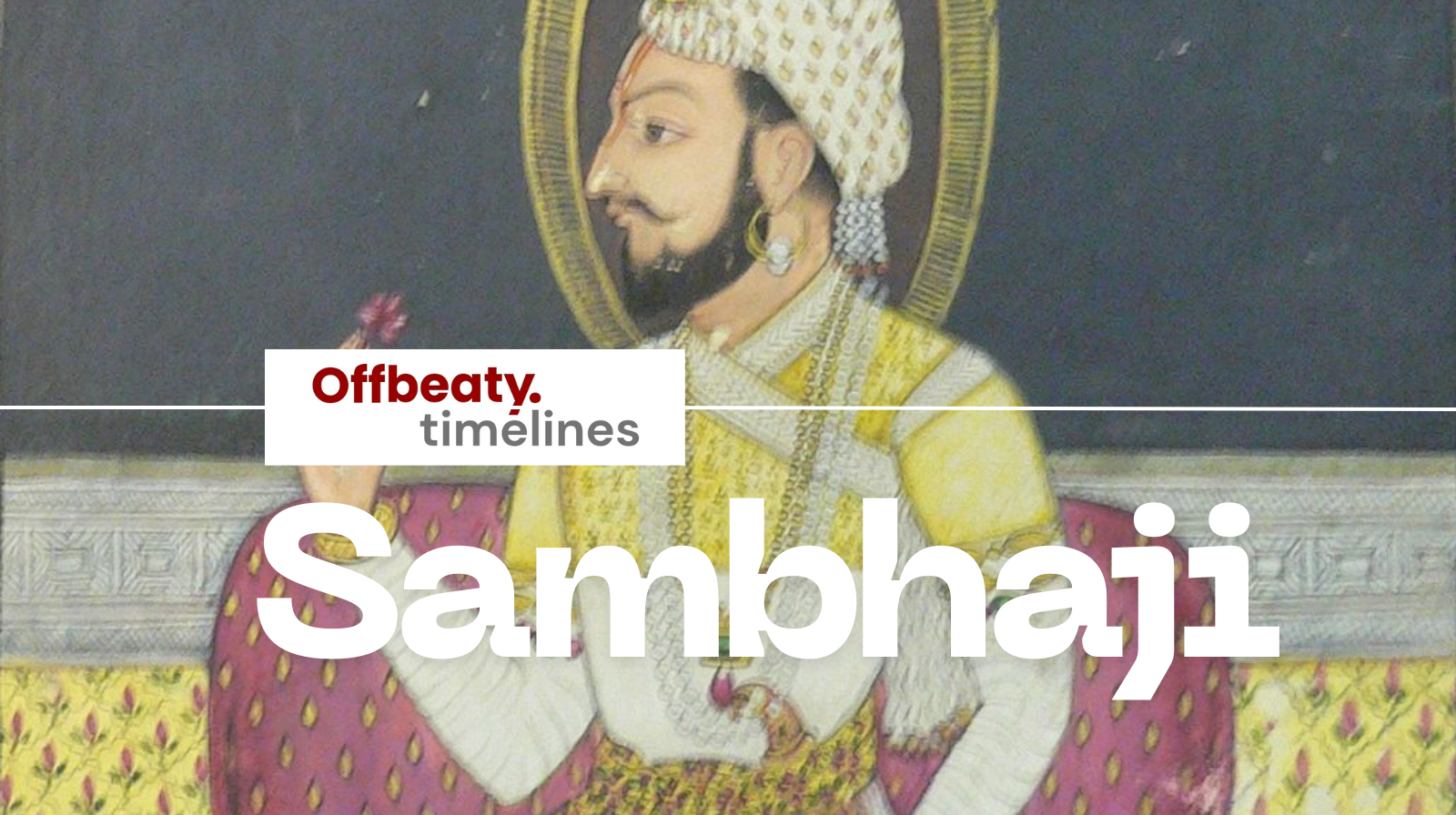
Timeline of Sambhaji (1657 – 1689)
Sambhaji Bhonsale (born 14 May 1657 at Purandar Fort, near Pune) was the eldest son of Chhatrapati Shivaji Maharaj and his first wife Saibai Nimbalkar.
He grew up amid his father’s conquests, faced early political intrigue, and became a skilled warrior and scholar (proficient in Sanskrit). His reign (1680/1681–1689) was marked by intense resistance against Mughal emperor Aurangzeb’s massive invasions, continued guerrilla warfare (ganimi kava), raids on Mughal territories, and defense of Swarajya (self-rule).
Despite internal challenges and betrayals, he refused to submit or convert to Islam, even under extreme torture. His 9-year rule (formal from 1681) strengthened Maratha resolve, though it ended tragically with his capture and execution, inspiring fiercer resistance under successors like Rajaram.
Chronological timeline of key events in his life and reign:
- 1657 May 14: Born at Purandar Fort to Shivaji and Saibai.
- 1659 September 5: Mother Saibai dies early (at Rajgad Fort); raised by grandmother Jijabai and others.
- 1661 April 29: Marries Yesubai (from Shirke family); they later have son Shahu (future Chhatrapati).
- 1665 June 12: Treaty of Purandar: Shivaji cedes forts to Mughals; young Sambhaji sent as political hostage to Mughal general Mirza Raja Jai Singh.
- 1666: Accompanies Shivaji to Agra; both placed under house arrest by Aurangzeb; dramatic escape in August 1666 (hidden in sweet baskets).
- 1670s: Participates in Shivaji’s campaigns; involved in southern expeditions and fort defenses.
- 1680 April 3: Shivaji dies at Raigad Fort; palace intrigue ensues, some ministers favor half-brother Rajaram (minor) over Sambhaji.
- 1680 July 20: Sambhaji escapes confinement at Panhala Fort, seizes Raigad, eliminates rivals; symbolically/ formally crowned Chhatrapati (some sources note formal ascension January 1681 after consolidation).
- 1680–1681: Suppresses internal opposition; consolidates power; begins aggressive campaigns against Mughals.
- 1681: Raids and sacks Burhanpur (major Mughal trade center); challenges Mughal viceroy; declares open war on Aurangzeb.
- 1681 onward: Intense Mughal-Maratha Wars: Aurangzeb personally leads massive army to Deccan; Sambhaji employs hit-and-run tactics, raids, and fort defenses.
- 1682–1688: Prolonged Siege of Ramsej Fort: Marathas resist Mughal assaults for years; exemplifies defensive resilience.
- 1683–1684: Konkan campaigns, fights Siddis of Janjira and Portuguese to secure western coast and naval interests.
- 1680s: Multiple raids on Mughal territories; alliances attempted (e.g., with Prince Akbar, Aurangzeb’s rebellious son, who joins Marathas briefly but flees); southern expansions continued.
- 1689 February 1: Captured near Sangameshwar (Konkan) during a raid, betrayed by local elements (Shirke relatives and others); handed to Mughal commander Muqarrab Khan.
- 1689 February–March: Imprisoned and brutally tortured for 40 days by Aurangzeb’s orders (to force conversion and submission); refuses repeatedly, defiantly praises Hinduism.
- 1689 March 11: Executed at Tulapur (or Vadhu/Koregaon on Bhima River near Pune), tortured horrifically (including skinning, use of tiger claws/wagh nakhe, dismemberment) before beheading at age 31; body parts displayed as warning. Succeeded by half-brother Rajaram I (who continues guerrilla war from forts like Jinji).
Sambhaji’s reign was defined by unyielding defiance against overwhelming Mughal forces, maintaining Maratha independence through bravery and strategy despite limited resources.
His martyrdom galvanized the Marathas, turning the tide toward prolonged resistance that eventually weakened Aurangzeb’s empire. Revered as a symbol of courage, sacrifice, and Hindu pride (“Dharmaveer”), his legacy endures in Maharashtra and Indian history as the fierce protector of Swarajya.