GI Tags Of Odisha
Rajasthan, the “Land of Kings,” is celebrated for its majestic forts, vibrant culture, arid landscapes, and exquisite traditional crafts. The state has earned several Geographical Indication (GI) tags that safeguard its unique products, from agricultural items and famous snacks to world-renowned handicrafts and natural stones. These tags highlight the distinct qualities tied to Rajasthan’s geography, climate, soil, and artisan heritage.
The selection below covers a range of Rajasthan’s registered GI products, focusing on agriculture, food stuffs, handicrafts, and natural goods.
Agricultural Products
- Sojat Mehndi (Registered 13.11.2018)
Natural henna (mehndi) from Sojat in Pali district, prized for its deep reddish color, high lawsone content (natural dyeing agent), long-lasting stain, and cooling properties. Grown in the region’s dry, sandy soil with traditional farming, it’s a staple for bridal ceremonies, festivals, and exports, often called the “Henna City” of India. - Nagori Ashwagandha (Registered 12.09.2023)
A potent medicinal herb (Withania somnifera) from Nagaur district in the Marwar region. Known for superior withanolide content, it thrives in the dry climate and sandy soils, offering high therapeutic value for stress relief, immunity, and vitality in Ayurveda. This GI tag boosts its global demand in herbal markets.
Food Stuff Products
- Bikaneri Bhujia (Registered 28.10.2008)
The iconic crunchy snack from Bikaner, made from moth bean (matki) flour, spices, and ghee using a unique besan-based extrusion technique. Its light, spicy, and addictive texture is a hallmark of Rajasthan’s street food and royal cuisine, perfect for munching with tea or during festivals.
Handicraft Products
- Kota Doria (Registered 22.07.2004)
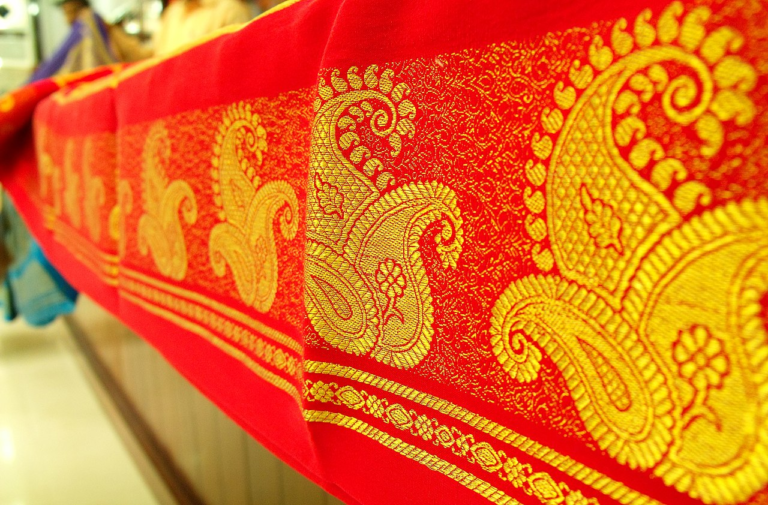
Lightweight, sheer cotton-silk sarees and fabrics from Kota, featuring fine checkered patterns (khat) with gold/silver zari borders. The transparent weave and breathability suit Rajasthan’s hot climate; a logo version is also protected. - Blue Pottery of Jaipur (Registered 14.08.2006)
Unique non-clay pottery from Jaipur using quartz stone powder, glazed in vibrant turquoise blue with floral and geometric motifs. Inspired by Persian and Mughal influences, it’s used for vases, tiles, and decorative items, no clay is involved, making it distinctive. - Molela Clay Work (Registered 31.08.2006)
Terracotta plaques and figurines from Molela village (near Nathdwara, Rajsamand), depicting deities, folk tales, and nature scenes in relief. Hand-molded and fired, they’re offered in temples and used as wall art. - Kathputlis of Rajasthan (Registered 31.08.2006)
Traditional string puppets from various regions, carved from wood with colorful costumes and expressive faces. Used in storytelling performances depicting epics and folklore, with logo protection for authenticity. - Sanganeri Hand Block Printing (Registered 02.12.2008)
Intricate block-printed fabrics from Sanganer (near Jaipur), using natural dyes and wooden blocks for floral, paisley, and geometric designs on cotton. Known for fine detailing and eco-friendly methods. - Bagru Hand Block Print (Registered 10.08.2009)
Similar to Sanganeri but from Bagru village, featuring earthy tones, mud resist-dyeing (Dabu technique), and bold motifs, prized for sustainable, chemical-free printing. - Thewa Art Work (Registered 17.10.2011)
Delicate gold filigree fused onto molten glass from Pratapgarh, creating intricate jewelry and artifacts with floral and royal motifs— a rare fusion technique. - Pokaran Pottery (Registered 19.01.2015)
Terracotta ware from Pokaran (Jaisalmer), including pots, lamps, and figurines with rustic designs and natural finishes. - Nathdwara Pichhwai Painting (Registered 12.04.2021)
Large devotional cloth paintings from Nathdwara, depicting Lord Krishna (Shrinathji) with elaborate scenes, gold work, and vibrant colors, used as temple backdrops. - Udaipur Koftgari Metal Craft (Registered 08.04.2021)
Inlay metalwork (damascening) from Udaipur, where gold/silver wires are hammered into steel or brass for swords, shields, jewelry, and decor with intricate patterns. - Bikaner Kashidakari Craft (Registered 13.04.2021)
Fine mirror embroidery (karchobi) from Bikaner, featuring zari, beads, and mirrors on fabrics for bridal lehengas and royal attire. - Jodhpur Bandhej Craft (Registered 19.04.2021)
Tie-dye (bandhej) fabrics from Jodhpur, creating dotted patterns through resist dyeing, vibrant and used in sarees, dupattas, and turbans. - Bikaner Usta Kala Craft (Registered 20.04.2021)
Miniature-style paintings on camel hide or paper from Bikaner, known as Usta art, featuring Mughal-influenced portraits, hunting scenes, and floral borders.
Natural Product
- Makrana Marble (Registered 09.04.2013)
Pure white marble from Makrana quarries (Nagaur district), used in iconic structures like the Taj Mahal. Renowned for its translucency, fine grain, durability, and ability to take high polish, often called “Sangemarmar.”
These GI tags protect Rajasthan’s artisan communities, prevent imitation, and promote exports while preserving cultural and natural heritage. The state boasts around 20–22 registered GIs (with recent additions in agriculture and crafts), reflecting its blend of royal legacy and desert ingenuity.