Buttonhole & Craftmanship
Buttonholes might seem like minor details in clothing, but they reveal a surprising amount about craftsmanship, tradition, and quality, especially in tailored garments like suits and jackets. Whether you’re sewing at home, buying off-the-rack, or commissioning bespoke tailoring, understanding the different types helps you appreciate (or spot) the difference between ordinary and exceptional work.
This post explores the main types of buttonholes, grouped by construction method, shape, location, and functionality.
1. By Construction Method
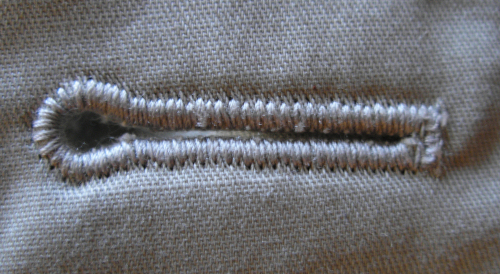
- Machine-Made Buttonholes
The most common type on ready-to-wear clothing. A sewing machine stitches two parallel rows of tight zigzag (or satin stitch) on either side of a slit, then cuts the opening (or cuts first in some automated processes). Ends are reinforced with bar tacks.
Pros: Fast, consistent, inexpensive.
Cons: Flat appearance, visible stitching on both sides, less durable under heavy use.
You’ll see these on most casual shirts, blouses, and budget suits. - Hand-Sewn (Hand-Worked) Buttonholes
Cut first, then finished by hand with the classic buttonhole stitch (a reinforced blanket stitch). The stitches are dense and slightly irregular, often thicker and raised, with knots placed strategically.
Pros: Superior strength, elegant texture, a hallmark of bespoke tailoring.
Cons: Time-intensive and skill-dependent.
Common in high-end menswear, shirts, and jackets. The subtle unevenness is actually a sign of true handwork. - Bound Buttonholes
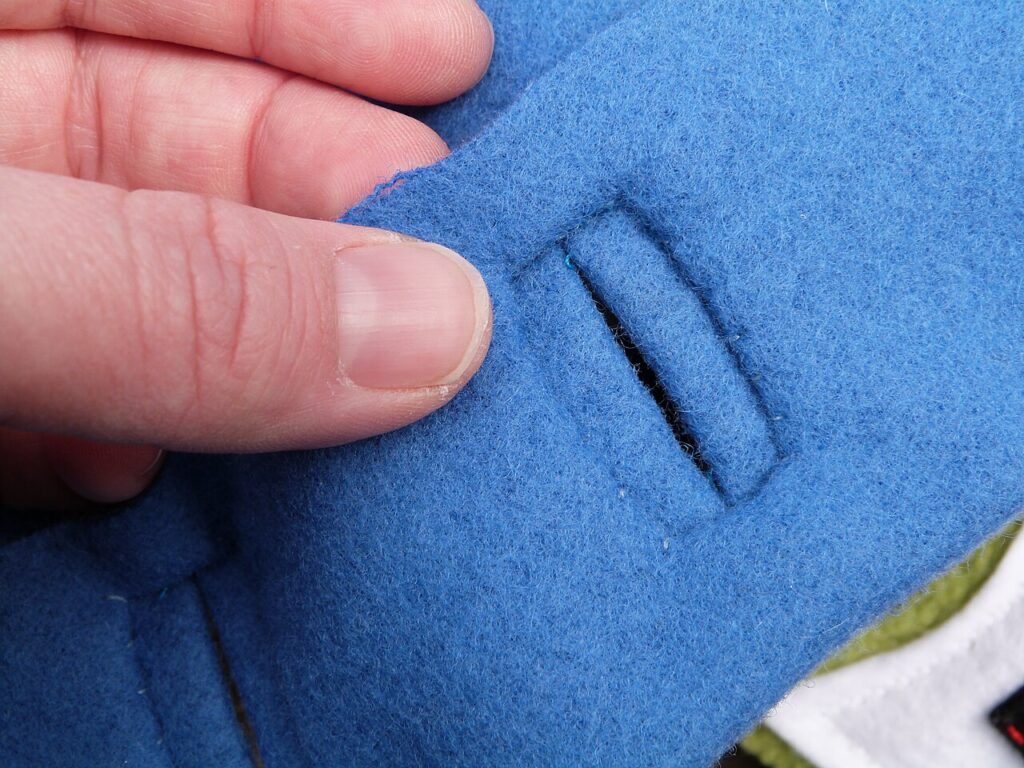
Instead of stitching over raw edges, narrow strips of fabric (welts) are folded and sewn to encase the slit, creating two small lips that meet in the center.
Pros: Clean, sophisticated look with no visible raw edges.
Cons: Labor-intensive, higher skill required.
Frequently used on coats, tailored jackets, and luxury outerwear—often considered a couture-level finish.
2. By Shape
- Straight / Rectangular / Square Buttonhole
Basic shape with square ends and parallel sides. Simple and versatile.
Used widely on shirts, casual wear, and vertical placements. - Rounded-End Buttonhole
One or both ends are gently curved for a softer look. Often reinforced with a bar tack on the straight end.
Good for lightweight fabrics or vertical buttonholes on blouses and lighter jackets. - Keyhole Buttonhole (Tailor’s Buttonhole)
Rectangular slit with a small circular or teardrop “keyhole” at one end (usually the end closest to the garment opening) to accommodate shank buttons or thicker shanks without distorting fabric.
Classic choice for horizontal placements on heavyweight tailored coats, jackets, and suits—helps the button sit flat under stress.
3. Special / Luxury Variations (Especially in Menswear)
- Milanese Buttonhole (Boutonnière à la Milanaise or Asola Lucida)
The gold standard of lapel buttonholes in bespoke tailoring. The slit is cut first, then a silk gimp cord (thicker filler thread) is laid around the edges. Glossy silk thread is wound tightly around the gimp (knots hidden underneath), creating a shiny, raised, perfectly smooth finish with no visible knots on top.
Often slightly curved, straight, angled, or slanted for flair.
Originated in Italy (Milan/Abruzzi region), popularized in Paris. A subtle but unmistakable sign of top-tier craftsmanship, rare even in high-end ready-to-wear. - English Buttonhole
Sturdy, subtle, and understated. Hand-stitched with a more traditional raised edge and visible (but neat) knots. Emphasizes durability over flash. - Italian Variations
More artistic flair, varied stitching patterns, sometimes wider edges or playful irregularity. Charm over strict uniformity.
4. By Location & Functionality in Suits & Jackets
- Lapel Buttonhole (Boutonnière Hole)
Usually one on the left lapel (sometimes both on double-breasted). Originally functional for fastening in cold weather; now decorative for flowers (boutonnières), pins, or symbolic use.
High-quality versions are working/hand-stitched (often Milanese) with a tiny silk loop on the back to secure a flower stem. - Sleeve / Cuff Buttonholes (Surgeon’s Cuffs)
3–4 per sleeve.- Functional (Working): Holes are cut open so buttons actually fasten/unfasten. A historic nod to surgeons rolling sleeves; today a clear marker of bespoke or high-end tailoring.
- Non-Functional (Decorative): Buttons sewn on but holes not cut—standard on most ready-to-wear.
Bonus detail: “Kissing” buttons (slight overlap) vs. spaced buttons signal refinement.
- Front / Body Buttonholes
Standard on jacket fronts, usually hand-finished in bespoke for elegance and strength.
Buttonholes are small, but they’re one of the easiest ways to judge real craftsmanship. Next time you slip on a jacket, take a second to inspect the lapel and cuffs, the details tell a story.