Timeline Of Sher Shah Suri
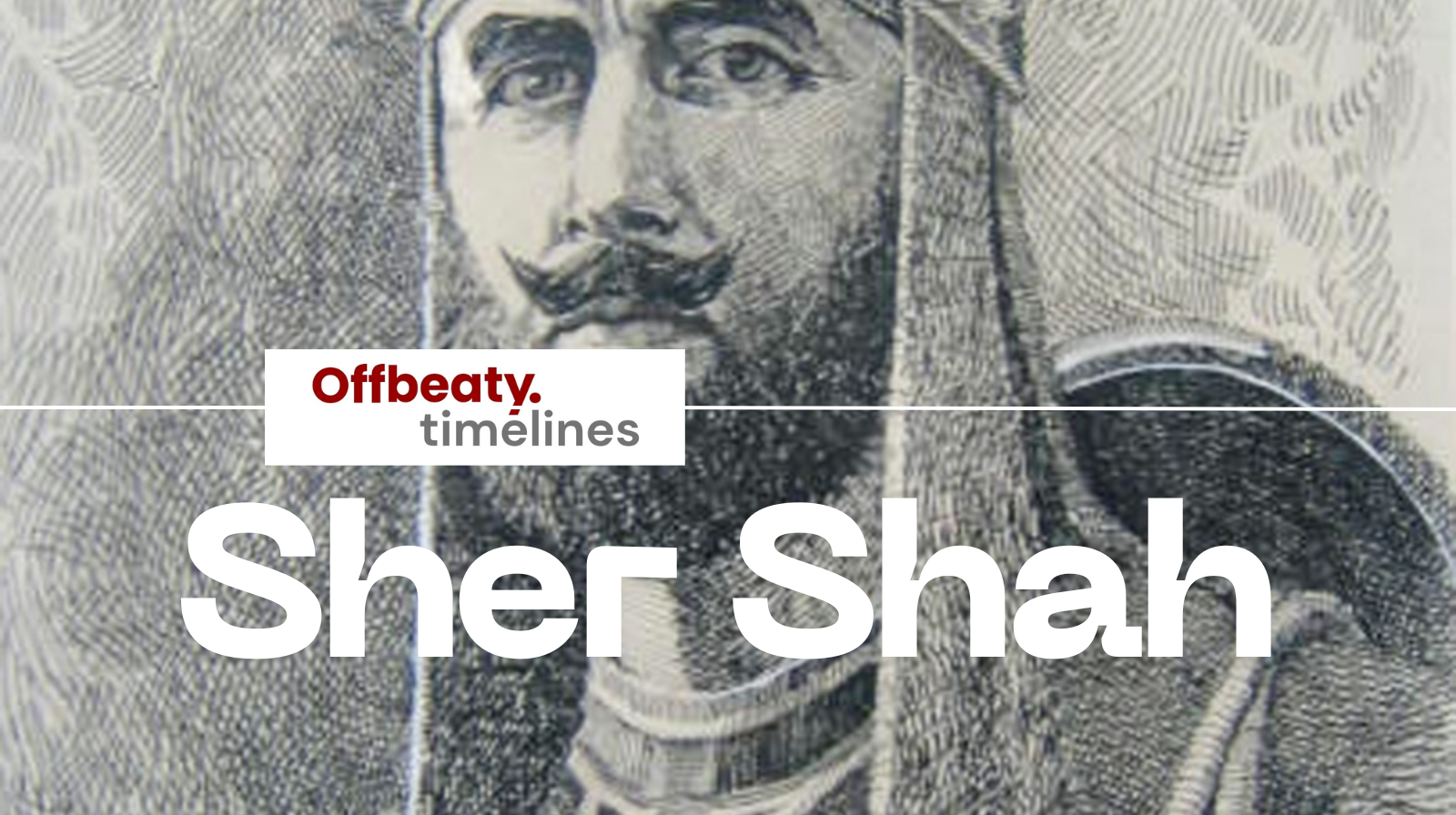
Sher Shah Suri (born around 1472–1486 in Sasaram, Bihar) was an Afghan-origin ruler who rose from humble beginnings as the son of a jagirdar (landholder). He earned the title “Sher Khan” (Tiger Lord) after reportedly killing a tiger single-handedly. Through military skill, strategic alliances, and administrative talent, he displaced the Mughal emperor Humayun and established the short-lived but highly influential Sur Empire (also called the Second Afghan Empire).
His 5-year reign (1540–1545) as Sultan of Hindustan introduced groundbreaking reforms in administration, revenue, currency, infrastructure, and military organization, many of which Akbar later adopted and expanded. He is often praised as one of India’s greatest administrators for creating an efficient, just, and centralized system with minimal corruption.
Chronological timeline of key events in his life and reign:
- 1472/1486: Born as Farid Khan in Sasaram (Rohtas district, Bihar) to Hasan Khan Sur, a jagirdar under the ruler of Bihar.
- Early 1500s: Leaves home due to family disputes (stepmother issues); studies in Jaunpur; joins service of Jamal Khan (governor of Jaunpur), later reconciles with father and manages family jagirs.
- Around 1510s–1520s: Enters service of Bahar Khan Lohani (governor of Bihar under Mughals); earns title “Sher Khan” for bravery (killing a tiger); rises to prominence as administrator.
- 1520s–1530: After Bahar Khan’s death, becomes virtual ruler/regent for minor successor Jalal Khan; asserts independence from Mughals around 1531.
- 1530: Acquires Chunar fort (key strategic stronghold) through marriage alliance or negotiation.
- 1534: Defeats combined forces of Bengal Sultan Ghiyasuddin Mahmud Shah and others; consolidates power in Bihar.
- 1537–1538: Conquers Bengal; captures Gaur (Bengal capital); tricks and seizes Rohtas fort (builds new Rohtasgarh); crowned Sultan in Gaur (some sources say 1538).
- 1539 June 26: Battle of Chausa — decisively defeats Mughal emperor Humayun; Humayun barely escapes; assumes royal title Farid al-Din Sher Shah.
- 1540 May 17: Battle of Kannauj (or Bilgram) — crushes Humayun’s army; occupies Delhi and Agra; drives Mughals out of India; crowned again in Kannauj as Sultan Adil (“the Just King”); founds Sur Empire with capital at Sasaram/Delhi influence.
- 1540–1541: Consolidates control over Bengal, Bihar, Hindustan, Punjab; suppresses Baluch tribes on northwest frontier; advances into Malwa and captures Gwalior.
- 1540s: Implements major reforms:
- Land revenue system: Measurement-based (zabt-like), fair assessment, direct collection to reduce corruption.
- Currency: Introduces high-quality silver rupee (standardized, precursor to modern rupee) and copper dam.
- Infrastructure: Builds/upgrades Grand Trunk Road (from Bengal to Punjab/Sindh); establishes sarais (rest houses with wells, mosques, postal system); promotes trade.
- Administration: Centralized bureaucracy, efficient army (branding horses, descriptive rolls), justice system with local officials accountable.
- Military: Standing army, intelligence network.
- 1542–1545: Expands empire — conquers parts of Rajputana, suppresses revolts (e.g., in Raisen with reported massacre after surrender); campaigns against Rajputs and others.
- 1545 May 22: Dies at age ~59–73 from wounds/explosion (cannon misfire or gunpowder accident) during siege of Kalinjar fort (Bundelkhand, against Kirat Rai); buried in grand tomb at Sasaram (architectural masterpiece influencing later Mughal tombs). Succeeded by son Islam Shah Suri.
Sher Shah’s brief reign transformed northern India through efficient governance and innovations that bridged Afghan and Mughal traditions. His Sur Empire collapsed after successors’ infighting, allowing Humayun’s return in 1555, but his reforms profoundly shaped Akbar’s empire and even influenced British colonial systems (e.g., revenue and roads). He is remembered as a brilliant self-made ruler who prioritized justice, infrastructure, and merit over birth.