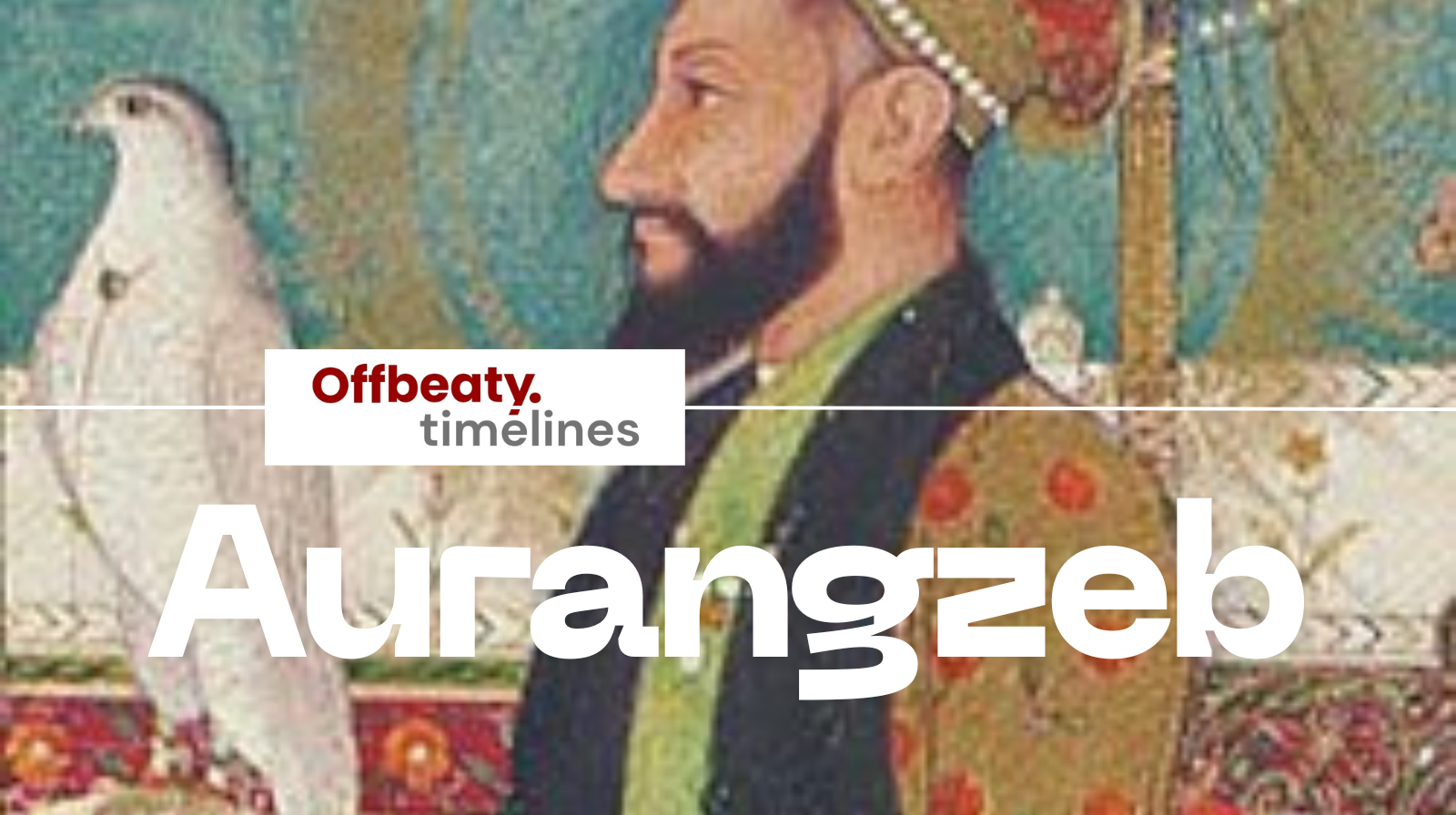
Timeline Of Aurangzeb (1618 – 1707)
Aurangzeb (born 3 November 1618 in Dahod, Gujarat) was the third son of Shah Jahan and Mumtaz Mahal. Known for his piety, strict orthodoxy, military prowess, and administrative skill, he ascended the throne through a ruthless war of succession.
His 49-year reign (1658–1707) saw the Mughal Empire reach its greatest territorial extent (covering nearly all of the Indian subcontinent), but at great cost: endless wars (especially in the Deccan), economic strain, rebellions (Rajput, Maratha, Sikh, Jat), and policies that shifted toward Islamic orthodoxy (e.g., reimposition of jizya, temple destructions in some cases, though debated in extent and motivation).
He lived ascetically, copied the Quran for income, and emphasized sharia-based governance. His long Deccan campaigns drained resources and weakened central authority, contributing to the empire’s decline after his death.
Chronological timeline of key events in his life and reign:
- 1618 November 3: Born as Muhi-ud-Din Muhammad in Dahod (Malwa/Gujarat region) to Shah Jahan and Mumtaz Mahal.
- 1630s: Early military roles; crushes Bundela revolt (Jujhar Singh of Orchha) in 1635.
- 1636–1644: First term as viceroy of the Deccan; gains administrative and military experience.
- 1645–1647: Governor of Gujarat; campaigns against Uzbeks/Persians in northwest (1646–1647).
- 1652–1658: Second term as viceroy of the Deccan; subdues Bijapur and Golconda temporarily; builds power base.
- 1657–1659: War of succession — Shah Jahan falls ill (1657); Aurangzeb defeats Dara Shikoh at Battle of Dharmat (April 1658) and Battle of Samugarh (May 1658); imprisons Shah Jahan in Agra Fort; defeats Shuja at Khajwa (1659); executes Dara Shikoh (August 1659); executes Murad Baksh (1661); Shah Shuja flees and dies (1660/1661).
- 1658 May 29 / July 31: Ascends throne as Aurangzeb Alamgir (“World Conqueror”); formal coronation in Delhi (Sheesh Mahal).
- 1659–1660s: Consolidates power; suppresses early revolts; executes or exiles rivals; begins stricter Islamic policies (e.g., bans music, wine at court).
- 1660s: Campaigns against Yusufzai/Afghans in northwest; suppresses Jat and Satnami rebellions.
- 1669–1670s: Destructions of some major Hindu temples (e.g., Kashi Vishwanath in Varanasi 1669, Keshav Dev in Mathura 1670); orders construction of mosques on sites (extent and motivations debated by historians).
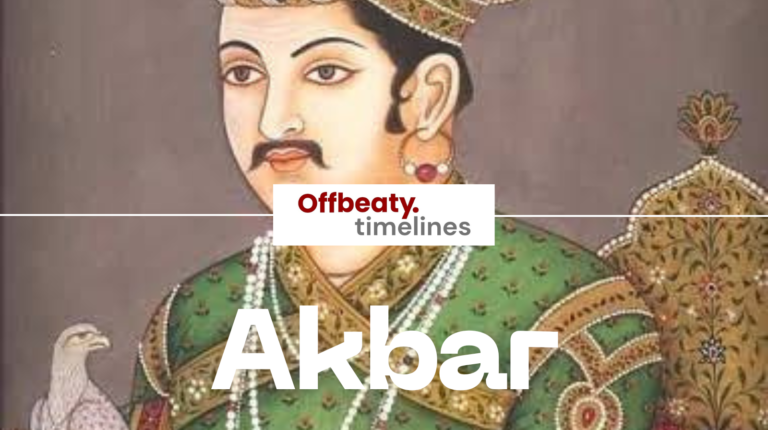
- 1679: Reimposes jizya tax on non-Muslims (abolished by Akbar); sparks protests and Rajput unrest.
- 1679–1681: Rajput revolt, Rathore and Sisodia clans rebel; supported by Aurangzeb’s son Prince Akbar (who rebels 1681, flees to Marathas/Persia, dies 1704).
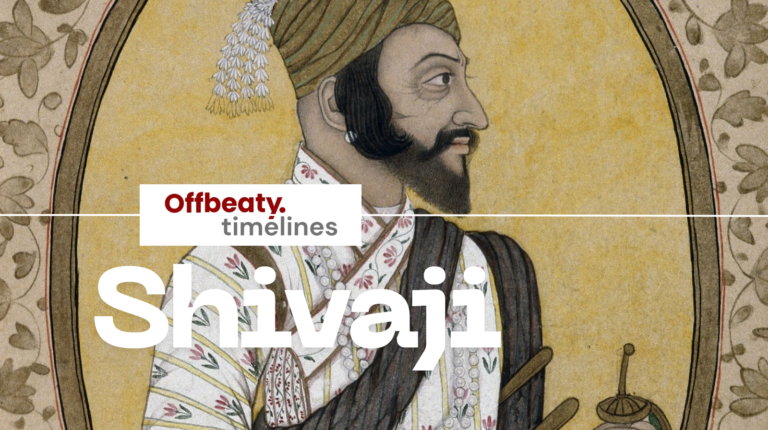
- 1680: Death of Shivaji Bhonsle (Maratha leader); Aurangzeb sees opportunity in Deccan.
- 1681 onward: Moves court/army to Deccan; launches prolonged campaigns (last ~26 years of life spent there).
- 1686: Annexes Bijapur Sultanate after siege.
- 1687: Annexes Golconda (Hyderabad) Sultanate; captures Abul Hasan Qutb Shah.
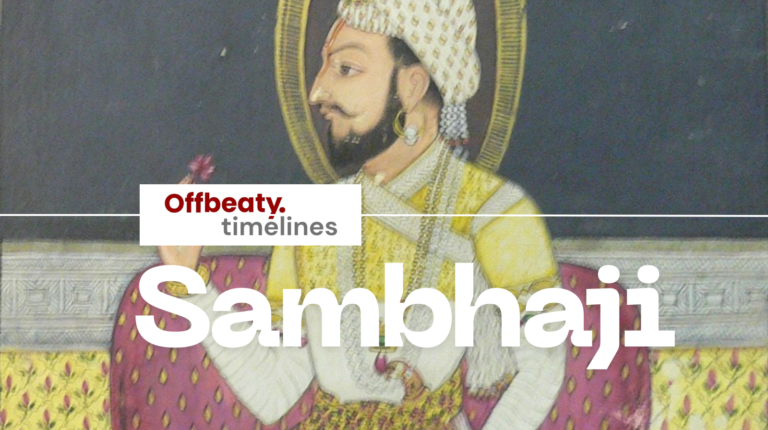
- 1689: Captures and executes Maratha king Sambhaji (Shivaji’s son); Marathas under Rajaram adopt guerrilla warfare.
- 1690s–1700s: Endless sieges and wars against Marathas (forts like Jinji, Satara); faces Sikh resistance (execution of Guru Tegh Bahadur in 1675 under earlier context, but tensions continue); Jat and other uprisings.
- 1707 March 3: Dies in Ahmadnagar (Deccan) at age 88 (likely from illness/old age); buried simply in Khuldabad near Aurangabad. Succeeded by son Bahadur Shah I after brief succession struggle.
Aurangzeb’s reign marked the zenith of Mughal territorial power but sowed seeds of decline through overextension, heavy taxation for wars, alienation of groups (Rajputs, Marathas, Sikhs), and shift from Akbar’s inclusive policies to stricter orthodoxy.
While a skilled warrior and administrator who expanded the empire massively, his policies and long southern wars exhausted resources, leading to rebellions and fragmentation after his death. His legacy remains highly debated: admired by some for piety and expansion, criticized by others for intolerance and contributing to Mughal downfall.