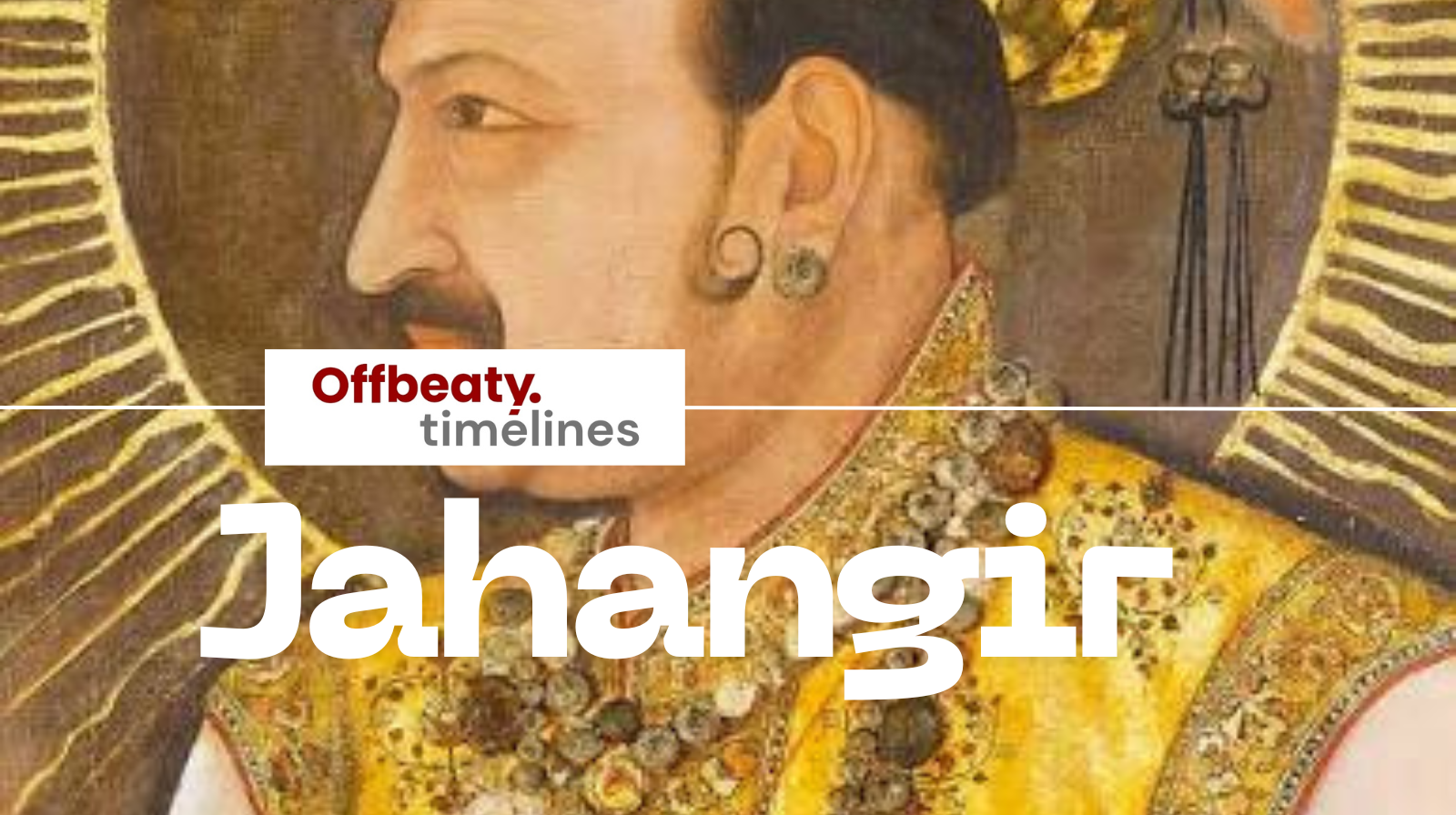
Timeline Of Jahangir (1569 – 1627)
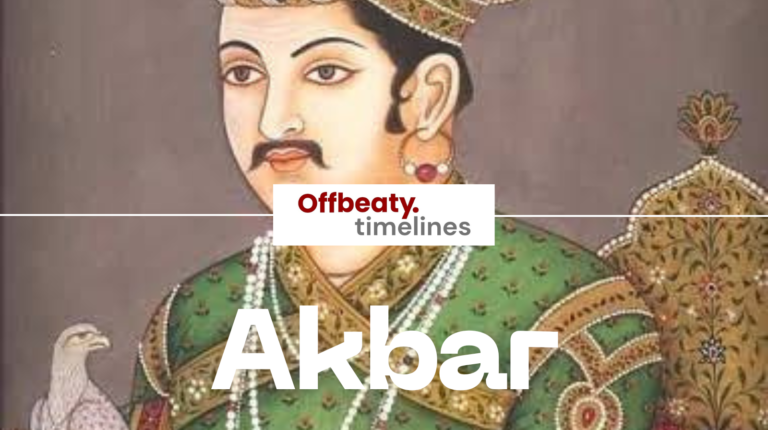
Jahangir (born 31 August 1569 in Fatehpur Sikri) was the eldest son of Akbar and his Rajput wife Mariam-uz-Zamani (Harka Bai/Jodha Bai). He succeeded his father on 3 November 1605 at age 36 after Akbar’s deathbed confirmation, despite earlier rebellion (1599) due to impatience for power.
His 22-year reign (1605–1627) emphasized continuity with Akbar’s policies: religious tolerance (allowing Jesuit missions, Hindu-Muslim debates), justice (famous “Chain of Justice”), patronage of arts (Mughal painting peaked with artists like Bichitr, Mansur), and nature (detailed memoirs Tuzuk-i-Jahangiri).
However, real power often lay with his influential wife Nur Jahan (married 1611) after 1611, her family, and court factions. The empire consolidated rather than massively expanded, with focus on Deccan campaigns, Mewar submission, and European trade contacts (e.g., British East India Company factory in Surat, 1612–1615). His reign saw court intrigue, family rebellions, and cultural flourishing but limited territorial gains.
Chronological timeline of key events in his life and reign:
- 1569 August 31: Born as Prince Salim in Fatehpur Sikri to Akbar and Mariam-uz-Zamani.
- 1580s–1590s: Educated in administration and military; marries multiple times, including Rajput alliances (e.g., 1586 to daughter of Bhagwan Das of Amber).
- 1599: Rebels against Akbar while father campaigns in Deccan; sets up rival court in Allahabad; later reconciled.
- 1605 October 27: Akbar dies; Salim ascends throne as Jahangir (“World-Seizer”) on 3 November 1605; coronation on 24 November at Agra Fort.
- 1606: Suppresses rebellion by eldest son Prince Khusrau (supported by some nobles and Sikhs); Khusrau captured, blinded later; Guru Arjan Dev (Sikh fifth guru) executed for alleged support, straining Mughal-Sikh relations.
- 1607–1611: Early reign, continues Akbar’s mansabdari and revenue systems; promotes justice (installs “Chain of Justice” for direct petitions); allows Jesuit debates and conversions.
- 1611 May: Marries Mehr-un-Nisa (widow of Sher Afgan), renames her Nur Mahal (“Light of the Palace”); she becomes highly influential as Nur Jahan (“Light of the World” from 1616).
- 1612–1615: Grants trading rights to British East India Company (Sir Thomas Roe’s embassy 1615–1619 secures privileges); English factory established in Surat.
- 1613–1615: Mewar campaign — Prince Khurram (future Shah Jahan) leads forces; Rana Amar Singh of Mewar submits in 1615 (peace 1614–1615 on generous terms); ends long resistance.
- 1615: Captures Kangra Fort (Himachal region) after siege; incorporates Katoch rulers as vassals.
- 1616–1621: Deccan campaigns against Ahmadnagar Sultanate — intermittent wars; Prince Khurram achieves successes (e.g., 1617, 1621 treaties); thwarted by Malik Ambar’s guerrilla tactics.
- 1620: Nur Jahan’s influence peaks; she issues coins, farman (edicts), and controls appointments with family (father Itimad-ud-Daulah, brother Asaf Khan).
- 1622–1625: Prince Khurram (Shah Jahan) rebels against Nur Jahan’s faction; flees to Deccan; defeated but later reconciled.
- 1626: Mahabat Khan (rival noble) stages coup, briefly imprisons Jahangir and Nur Jahan; they escape and regain control.
- 1627 October 28: Dies en route from Kashmir to Lahore (aged 58, likely from illness/alcohol effects); buried in Shahdara Bagh near Lahore. Succeeded by Shah Jahan after brief intrigue (Nur Jahan’s preferred candidate Shahryar defeated).
Jahangir’s reign maintained Mughal stability and cultural splendor (miniature paintings, memoirs, gardens like Shalimar), but lacked Akbar’s dynamism or major expansions.
Power dynamics shifted toward Nur Jahan’s “junta,” leading to court factions and family conflicts. His artistic patronage and tolerance continued Akbar’s legacy, influencing later Mughals like Shah Jahan.