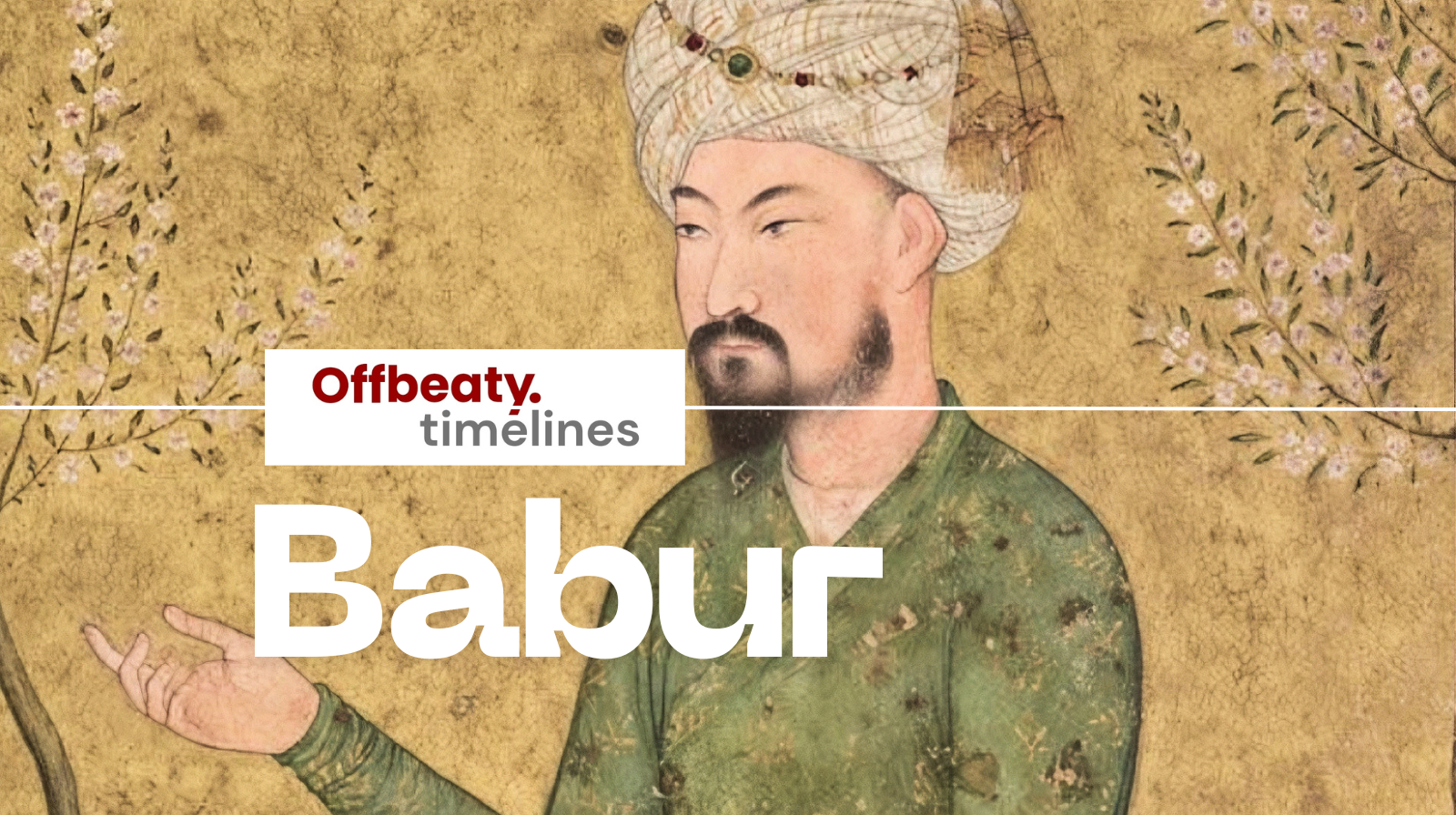
Timeline Of Babur’s Reign (1483 – 1530)
Babur (born 14 February 1483 in Andijan, Fergana Valley, now Uzbekistan) was a descendant of Timur (on his father’s side) and Genghis Khan (on his mother’s side). He inherited a small principality at age 11 but faced constant struggles in Central Asia before turning southward. He conquered Kabul in 1504 and used it as a base.
His invasions into India began around 1519, culminating in the establishment of the Mughal Empire in northern India. His reign as Mughal emperor was short (1526–1530), focused on military conquests using innovative tactics like artillery and tulughma (flanking maneuvers). He authored the Baburnama, a famous memoir in Chagatai Turkic.
Chronological timeline of key events in his life and reign:
- 1483 February 14: Born as Zahir-ud-din Muhammad in Andijan, Fergana (Timurid Empire).
- 1494: Succeeds his father Umar Sheikh Mirza as ruler of Fergana at age 11.
- 1497–1501: Multiple attempts to capture and hold Samarkand (his ancestral capital); briefly succeeds but loses it to Uzbeks under Muhammad Shaybani Khan.
- 1501: Defeated at the Battle of Sar-e-Pul; loses Fergana and Samarkand permanently.
- 1504: Conquers Kabul and Ghazni; establishes himself there as a stable base after years of exile and losses in Central Asia.
- 1505–1512: Various campaigns in Afghanistan and against Uzbeks (e.g., Battle of Qalat 1506, Battle of Ghazdewan 1512); last failed attempt on Samarkand in 1511–1512.
- 1519–1525: Initial expeditions into India (five raids): Captures Bajaur (1519), controls parts of Punjab by 1524–1525; invited by disaffected nobles like Daulat Khan Lodi against Ibrahim Lodi.
- 1526 February 26: Battle of Hisar Firoza — initial clash with Lodi forces during the campaign.
- 1526 April 21: First Battle of Panipat — Babur defeats and kills Sultan Ibrahim Lodi of Delhi with 12,000 troops (using artillery and tactics) against a much larger army (100,000 men + elephants). Occupies Delhi shortly after and reaches Agra on May 4; founds the Mughal Empire in India.
- 1526–1527: Consolidates control over Delhi-Agra region; faces resistance from Afghan chiefs and Rajputs.
- 1527 March 16–17: Battle of Khanwa — Defeats a massive Rajput-Afghan confederacy led by Rana Sanga of Mewar near Agra. A decisive victory securing Mughal dominance in northern India.
- 1528 January: Battle of Chanderi — Captures the Rajput fortress of Chanderi from Medini Rai (ally of Rana Sanga).
- 1529 May 6: Battle of Ghaghra — Defeats Afghan forces under Mahmud Lodi (brother of Ibrahim) near the Ghaghra-Ganges confluence; extends influence eastward into Bihar and Bengal regions.
- 1530: Final years spent in Agra; lays out gardens (e.g., Ram Bagh by the Yamuna River); health declines.
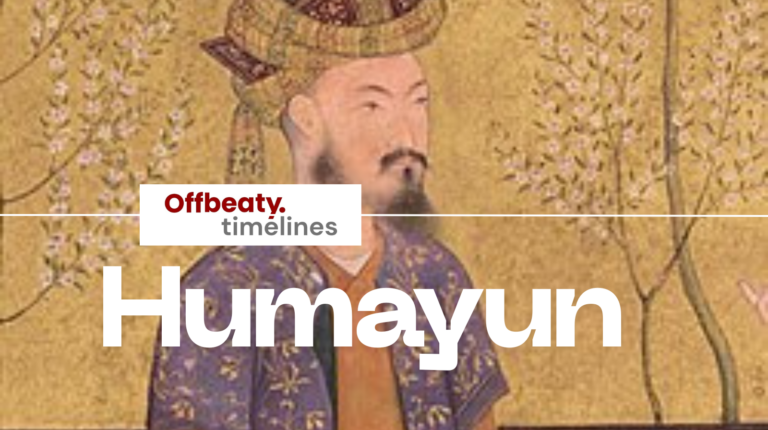
- 1530 December 26: Dies in Agra at age 47 (possibly from illness); buried initially in Agra, later moved to Kabul (Bagh-e-Babur). Succeeded by his son Humayun.
Babur’s brief 4-year reign in India (1526–1530) laid the foundation for the Mughal Empire through military innovation and rapid conquests, though the empire was fragile and expanded significantly under his successors (Humayun and especially Akbar).
His legacy includes introducing Central Asian military tactics, gunpowder artillery on a large scale in India, and cultural patronage via his detailed autobiography, the Baburnama.