Timeline Of Akbar’s Reign (1556 – 1605)
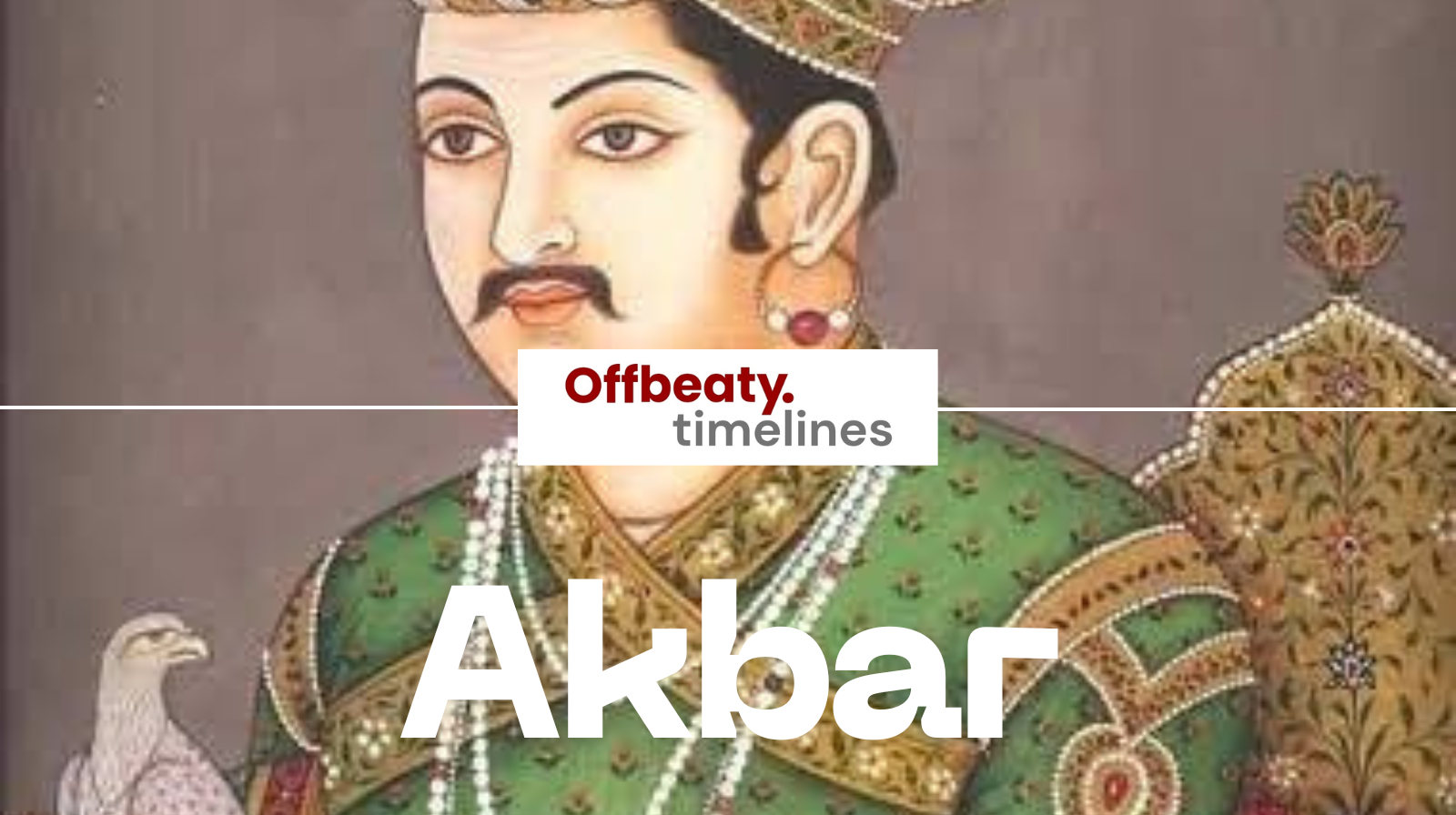
Akbar reigned from 11 February 1556 to 27 October 1605, succeeding his father Humayun at age 13. His rule marked the consolidation and massive expansion of the Mughal Empire through military conquests, administrative reforms, religious tolerance, and alliances (especially with Rajputs).
He centralized administration, introduced efficient revenue systems (like zabt), promoted cultural patronage, and pursued policies of sulh-i-kul (universal peace).
Chronological timeline of key events during his reign:
- 1542 (pre-reign): Akbar is born on 15 October in Umarkot (now in Sindh, Pakistan).
- 1556 February 14: Akbar is crowned emperor at Kalanaur (Punjab) at age 13, with Bairam Khan as regent.
- 1556 November 5: Second Battle of Panipat — Mughal forces under Bairam Khan defeat Hemu (who had briefly captured Delhi), securing Akbar’s throne and control over Delhi and Agra.
- 1560–1561: Akbar dismisses regent Bairam Khan and assumes full control; early reforms include banning enslavement of war captives/children.
- 1561: Conquest of Malwa (strategic region leading to the Deccan).
- 1562: Marriage alliance with Rajput princess Harka Bai (commonly called Jodha Bai/Mariam-uz-Zamani) of Amber (Jaipur); this begins policy of Rajput alliances. Akbar visits Ajmer shrine of Moinuddin Chishti; remits pilgrimage tax on Hindus (fully abolished later).
- 1563: Abolition of jizya tax on non-Muslims (temporarily; reimposed later but abolished again).
- 1567–1568: Siege and conquest of Chittorgarh (Mewar); major victory over Rajputs, though with heavy casualties.
- 1569: Conquest of Ranthambore (another key Rajput fort).
- 1571–1572: Foundation and development of new capital at Fatehpur Sikri (near Agra).
- 1572–1573: Conquest of Gujarat (including key port of Surat), bringing western trade routes under Mughal control.
- 1574–1576: Conquest of Bengal and Bihar; defeats Afghan rulers in the east.
- 1575: Establishment of Ibadat Khana (House of Worship) at Fatehpur Sikri for interfaith discussions.
- 1579: Issuance of the Mahzar (Infallibility Decree), asserting Akbar’s authority in religious matters.
- 1580: Arrival of the first Jesuit mission at the Mughal court (from Portuguese Goa), engaging in religious debates.
- 1580s: Introduction/refinement of the mansabdari system (military ranking with zat and sawar ranks) for administration and army organization.
- 1585–1598: Campaigns in the northwest — conquests in Kabul, Kashmir, and parts of modern Afghanistan; suppression of rebellions in Bengal, Gujarat, and elsewhere.
- 1590s–1600s: Further expansions and consolidations in the Deccan (attempts against Ahmadnagar and others); Akbar’s court becomes a center for arts, literature, painting (Mughal miniatures flourish), and scholars.
- 1605 October 27: Akbar dies (likely from dysentery) in Agra at age 63; buried at Sikandra near Agra. Succeeded by his son Jahangir.
Akbar’s 49-year reign transformed the Mughal Empire from a fragile kingdom into a vast, stable, multi-religious superpower covering most of northern and central India. His policies of religious tolerance, efficient governance, and military prowess earned him the title “the Great.”