Timeline Of Quad (2004 – Present)
The Timeline of the Quad (Quadrilateral Security Dialogue) charts the rise, fall, and resurgence of this informal strategic forum comprising Australia, India, Japan, and the United States.
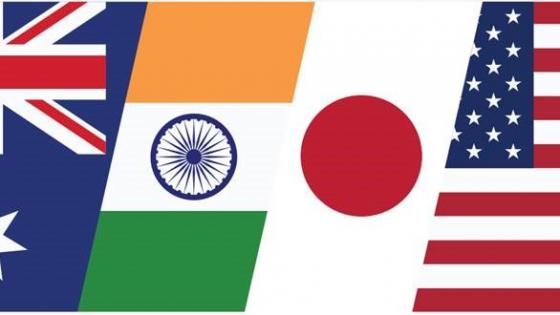
Often seen as a counterbalance to China’s growing influence in the Indo-Pacific, the Quad has evolved from ad-hoc humanitarian cooperation to a multifaceted platform addressing maritime security, economic resilience, technology, climate, health, and more, while deliberately avoiding formal alliance status.
Origins: Tsunami Cooperation and Quad 1.0 (2004–2008)
- December 26, 2004 — The devastating Indian Ocean tsunami kills over 228,000 people across 14 countries. Australia, India, Japan, and the United States form the informal “Tsunami Core Group” to coordinate rapid humanitarian aid and relief efforts, demonstrating effective multilateral coordination without institutional baggage.
- 2006–2007 — Japanese Prime Minister Shinzo Abe pushes for deeper ties, inspired by his vision of a “Confluence of the Two Seas” (merging Indian and Pacific Oceans as zones of freedom and prosperity). In late 2006, Japan’s Foreign Minister Taro Aso proposes quadrilateral cooperation. Abe meets Indian PM Manmohan Singh in Tokyo to discuss maritime issues and dialogue with like-minded partners.
- May 2007 — First formal Quad meeting: Senior officials from the four countries gather on the sidelines of the ASEAN Regional Forum in Manila, Philippines. This marks the birth of the Quadrilateral Security Dialogue.
- August 2007 — Abe addresses the Indian Parliament, urging deeper collaboration among “like-minded countries.”
- September 2007 — Unprecedented joint naval exercise “Malabar” includes all four navies (plus Singapore as observer), signaling military interoperability amid rising concerns over China’s assertiveness.
- 2008 — The grouping dissolves informally. Australia withdraws under new Prime Minister Kevin Rudd, wary of antagonizing China and complicating relations in the region. Quad 1.0 ends after just one year of activity.
Hiatus and Revival (2009–2017)
- 2008–2016 — The Quad lies dormant as bilateral ties (e.g., U.S.-Japan, India-U.S.) strengthen, but no quadrilateral format revives amid shifting priorities and China’s economic rise.
- November 2017 — Revival during the ASEAN Summits in Manila: Senior officials from the four countries meet again on the sidelines, agreeing to restart consultations. Driven by concerns over China’s actions in the South China Sea, East China Sea, and border tensions with India. This marks the start of Quad 2.0, with regular working-level meetings.
Institutionalization and Elevation (2018–2024)
- 2019 — First Quad Foreign Ministers’ Meeting on the sidelines of the UN General Assembly in New York. Annual ministerial meetings begin.
- 2020 — Australia rejoins Exercise Malabar fully after a 13-year gap, with all four navies participating amid heightened regional tensions.
- March 12, 2021 — Historic first Quad Leaders’ Summit (virtual), hosted by U.S. President Joe Biden. Leaders commit to a “free and open Indo-Pacific.” Three working groups launch: vaccines (COVID-19), climate change, and emerging technologies/supply chains.
- 2021–2023 — Summits alternate between virtual and in-person (e.g., Tokyo 2022, Hiroshima 2023). Agenda expands to maritime domain awareness (IPMDA), infrastructure, critical minerals, cybersecurity, and humanitarian assistance.
- September 21, 2024 — Quad Leaders’ Summit in Wilmington, Delaware (hosted by Biden). Focus on cancer initiatives, ports resilience, and countering coercion. The grouping emphasizes “practical cooperation” over military alliance rhetoric.
Recent Developments and Challenges (2025–Present)
- 2025 — A transitional “interregnum” year amid U.S. leadership change (Trump’s return) and bilateral frictions (e.g., trade tensions with India). No leaders’ summit occurs in India as originally planned; rescheduled discussions point to early 2026. Initiatives persist: Quad-at-Sea Ship Observer Mission launches (June), Ports of the Future Partnership meets in Mumbai (October), and Malabar exercise continues in Guam.
- January 2025 — Quad Foreign Ministers affirm commitment to a rules-based order and oppose unilateral changes by force.
- July 2025 — Foreign ministers condemn a terrorist attack in Pahalgam, Jammu and Kashmir.
- Late 2025–Early 2026 — Streamlined priorities emerge: maritime/transnational security, economic security, critical/emerging tech, and humanitarian response. Ongoing efforts include counterterrorism working groups, maritime domain awareness expansion, and supply-chain resilience. A potential leaders’ summit in early 2026 could reinvigorate momentum, with trade deals and operational cooperation (e.g., ports, coast guard) gaining traction.
The Quad remains leader-driven and informal—no secretariat, no binding treaties, yet it has quietly influenced Indo-Pacific dynamics by delivering public goods, enhancing interoperability, and signaling collective resolve.