Timeline Of US-Greenland Relations (1867 – Present)
The US-Greenland issue primarily revolves around repeated American interest in acquiring, purchasing, or gaining greater control over Greenland (an autonomous territory within the Kingdom of Denmark), driven by strategic, military, resource, and Arctic security considerations.
This dates back to the 19th century but has flared up dramatically under Donald Trump’s presidencies.
Historical Timeline of US Interest in Greenland
- 1867–1868 — Following the US purchase of Alaska from Russia, Secretary of State William H. Seward explores acquiring Greenland (and Iceland) from Denmark for strategic and resource reasons. Surveys are commissioned, but no formal offer materializes due to lack of support.
- 1910 — Renewed informal discussions about purchasing Greenland occur, but they go nowhere.
- 1916–1917 — As part of the Treaty of the Danish West Indies (US buys what becomes the US Virgin Islands from Denmark), the US recognizes Danish sovereignty over Greenland.
- 1941 (World War II) — After Germany’s occupation of Denmark, Danish envoy Henrik Kauffmann signs an agreement allowing the US to assume defense responsibilities for Greenland and establish military bases (including airfields and facilities). Greenland becomes a US protectorate for the war’s duration.
- 1946 — Post-WWII, President Harry Truman’s administration formally offers Denmark $100 million (in gold) to purchase Greenland outright for strategic Cold War reasons. Denmark rejects the offer.
- 1951 — Denmark (now a NATO member) signs a Defense Agreement with the US, allowing continued American military presence, including the establishment of Thule Air Base (now Pituffik Space Base) in northern Greenland for missile warning, surveillance, and Arctic operations.
- 1955 — The US Joint Chiefs of Staff briefly revive the idea of buying Greenland to secure permanent control, but it gains no traction.
- 1968 — A US B-52 bomber carrying nuclear weapons crashes near Thule Air Base, scattering plutonium and raising safety concerns, but the base remains operational.
- 1979 — Greenland gains Home Rule (greater autonomy) from Denmark.
- 2009 — Greenland achieves Self-Government status, with expanded autonomy over resources and internal affairs (though foreign policy and defense remain with Denmark).
- 2020 — The US reopens a consulate in Greenland (closed since 1953) and provides economic aid packages to counter potential Chinese influence in mining and infrastructure.
Modern Escalation Under Donald Trump (2019–2026)
- August 2019 (Trump’s first term) — Trump publicly expresses interest in purchasing Greenland, calling it a “large real estate deal” for national security and resources. Danish Prime Minister Mette Frederiksen calls the idea “absurd,” and Greenland officials state the island is “not for sale.” Trump cancels a planned state visit to Denmark in protest.
- 2020–2024 — The issue simmers under the Biden administration, with focus on cooperation (e.g., base maintenance contracts to local firms, mineral mapping, and Arctic security via NATO).
- December 2024 (post-2024 election) — President-elect Trump revives the idea on Truth Social, calling US control of Greenland “an absolute necessity” for national security against Russia and China.
- January 2025 — Early in his second term, Trump refuses to rule out military force or economic pressure. His son Donald Trump Jr. visits Nuuk (Greenland’s capital). Protests occur in Greenland against US annexation ideas. Trump appoints a special envoy for Greenland.
- March 2025 — Vice President JD Vance visits Greenland, emphasizing respect for sovereignty but floating military options in broader rhetoric.
- Late 2025 — Trump appoints Louisiana Gov. Jeff Landry as Greenland envoy. Tensions build with renewed calls for control.
- December 22, 2025–January 2026 — Escalation peaks: Trump threatens military action (refusing to rule it out), economic coercion (e.g., tariffs on Denmark and other European NATO allies like Norway, Sweden, Germany, France, UK, Netherlands, Finland), and demands “complete and total” purchase or control of Greenland. He links it to Arctic threats from Russia/China, missile defense (“Golden Dome”), and national security. Denmark and Greenland firmly reject any sale or loss of sovereignty. European allies condemn threats; NATO exercises in Greenland increase as a show of unity.
- January 14, 2026 — Trilateral talks in Washington (US VP Vance/SecState Rubio with Danish/Greenlandic foreign ministers) described as “frank but constructive.” Parties agree to a working group for ongoing discussions on security concerns (differing interpretations: US focuses on acquisition; Denmark on cooperation without sovereignty transfer).
- January 17, 2026 — Trump announces 10% tariffs (escalating to 25%) on several European countries unless a Greenland deal is reached.
- January 21, 2026 — At the World Economic Forum in Davos, Trump announces “immediate negotiations” for Greenland but states he “won’t use force.” He drops the tariff threat after talks with NATO Secretary-General Mark Rutte, claiming a “framework of a future deal” on Greenland and the broader Arctic (potentially involving enhanced US/NATO presence, limits on adversaries’ mining, or other compromises short of full annexation).
- January 22–present (as of early February 2026) — Danish PM Frederiksen reaffirms no negotiation on sovereignty but openness to security/economic talks. Negotiations continue via the working group. Trump hints at updates “in about two weeks.” The issue remains unresolved, straining US-Denmark/NATO ties while highlighting Arctic competition (minerals, shipping routes, military positioning).
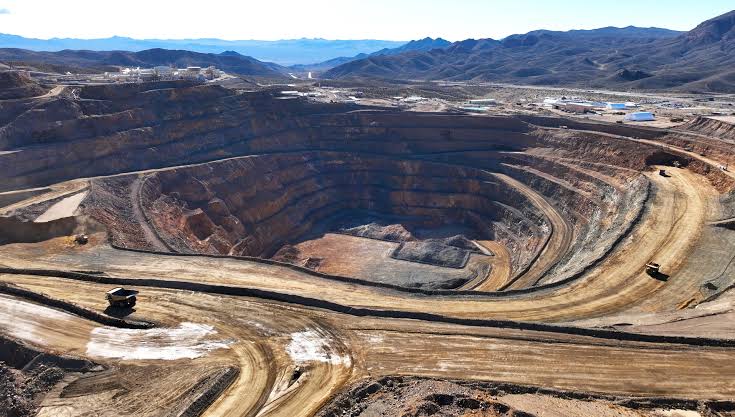
Greenland’s strategic value includes its location for missile defense, surveillance of the Arctic (increasingly contested due to climate change opening routes/resources), and rare earth minerals.
Denmark and Greenland consistently emphasize self-determination and sovereignty, with Greenlanders largely opposing joining the US.
The situation has evolved from historical curiosity to a major 2025–2026 diplomatic flashpoint, though recent de-escalation (no force/tariffs) suggests potential for negotiated security enhancements rather than outright transfer.