Timeline Of Semiconductor Industry In India (1960 – Present)
The semiconductor industry in India has a long and uneven history, marked by early ambitions, significant setbacks, periods of stagnation, and a dramatic resurgence in recent years driven by government initiatives and global partnerships.
India began exploring semiconductors as early as the 1960s but lagged in large-scale manufacturing for decades, relying heavily on imports and excelling instead in chip design (where it now hosts ~20% of the world’s talent).
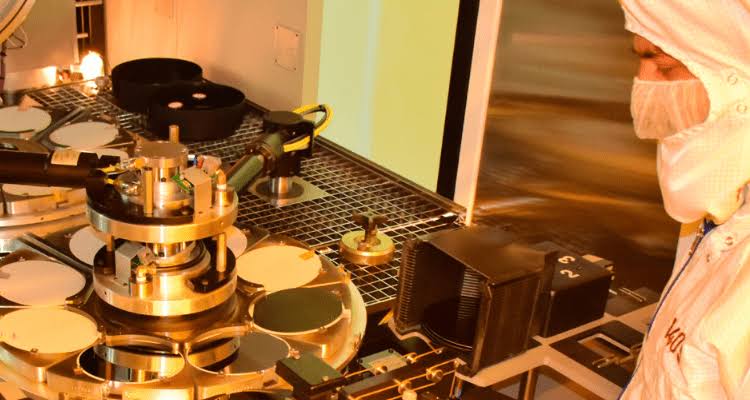
The turning point came with the India Semiconductor Mission (ISM) in 2021, leading to major investments and the first “Made in India” chips emerging by 2025.
Chronological timeline of key milestones:
- 1960s: Early foundations laid. Bharat Electronics Limited (BEL), a public sector undertaking, begins producing germanium and silicon-based transistors around 1962. Fairchild Semiconductor (a U.S. pioneer) considers setting up a facility in India but relocates due to bureaucratic hurdles.
- 1970s–early 1980s: Incremental efforts. Government initiatives promote indigenous electronics, including polysilicon wafer attempts (e.g., Metkem Silicon Limited in collaboration with BEL). Progress remains limited by policy gaps, lack of incentives, and global competition.
- 1984: Major milestone with the establishment of Semiconductor Complex Limited (SCL) in Mohali (Chandigarh/Punjab) as a public sector fab. India acquires 5-micron process technology from American Microsystems Inc. This predates TSMC’s founding (1987), positioning India early in the game. SCL advances to 0.8-micron technology by the late 1980s.
- 1989: Devastating setback. A major fire destroys much of SCL’s infrastructure, halting progress. Combined with outdated technology, funding shortages, and poor infrastructure, this stalls India’s manufacturing ambitions for decades. SCL shifts to niche R&D and defense/space applications rather than commercial scale.
- 1990s–2000s: Liberalization era. Economic reforms open doors to foreign investment, but no major fabs emerge. India builds strength in semiconductor design and services. In 2007, the first Semiconductor Policy is announced to encourage the sector.
- 2011: Design breakthrough. Hyderabad-based SoCtronics develops India’s first 28 nm chip design.
- 2013–2014: Revival attempt. Government issues Letters of Intent to consortiums (e.g., Hindustan Semiconductor with ST Microelectronics), but projects do not materialize.
- 2021: Game-changer. Launch of the India Semiconductor Mission (ISM) under the Programme for Development of Semiconductors and Display Manufacturing Ecosystem (₹76,000 crore/~US$10 billion outlay). Focuses on fabs, ATMP/OSAT facilities, compound semiconductors, and incentives (e.g., up to 50% subsidies).
- 2022: Modifications to schemes boost incentives. Early proposals and approvals begin flowing.
- 2023: First major wins. Micron Technology announces a US$2.75 billion ATMP facility in Sanand, Gujarat (groundbreaking in 2023).
- 2024: Momentum builds. Tata Electronics partners with Taiwan’s Powerchip for a major fab in Dholera, Gujarat (₹91,000 crore/~US$11 billion investment, targeting 28 nm). CG Power, Renesas (Japan), and Stars Microelectronics announce a facility in Sanand. Multiple projects approved across states.
- 2025: Historic breakthroughs. First end-to-end OSAT pilot line launches in Sanand. Cabinet approves additional projects (e.g., in Odisha, Punjab, Andhra Pradesh). Prime Minister Narendra Modi announces the first “Made in India” packaged semiconductor chips ready by December 2025, with commercial ramp-up in 2026 and full operations by 2027–2028. PM Modi presented with initial Made-in-India chips in September 2025. Total approved projects reach 10+ across states, with cumulative investments exceeding US$18–19 billion.
- 2026 (ongoing as of early 2026): ISM evolves to ISM 2.0, emphasizing equipment, materials, design IP, supply chains, and R&D. India positions itself as an emerging hub, though still behind global leaders in advanced nodes (e.g., focusing initially on mature nodes like 28 nm and packaging/testing).
India’s journey reflects missed opportunities in the 1980s–2010s due to policy, infrastructure, and external shocks, but recent policy support, incentives, and partnerships (Tata, Micron, CG Power, etc.) have created green shoots.
The sector now aims to reduce import dependence (India’s chip consumption was ~US$38–50 billion in recent years, mostly imported) and grow into a major player by 2030, potentially reaching a US$100+ billion domestic market.