Vegan Peanut Butter Chocolate Cheesecake

One year ago we embarked on the vegan cheesecake quest. My husband had that gleam in his eyes that he sometimes gets when he sees a worthy challenge set before him. This year it’s a different gleam, because now peanut butter has entered the picture and we’ve both realized that the possible flavors are endless.
Vegan Peanut Butter Chocolate Cheesecake
- 1 12.3-ounce package extra firm light silken tofu
- 1 8-ounce package Tofutti Better than Cream Cheese
- 3/4 cup sugar
- 1/2 cup milk
- 1/4 or 1/3 lb. dark chocolate Note that after two or three chocolate cheesecakes, we would recommend reducing the amount of chocolate – our original recommendation was 1 lb. but that really makes it too rich and overwhelming.
- 5 Tbsp. peanut butter
- 2 Tbsp. lemon juice
- 1 tsp. vanilla
- 3 Tbsp. cornstarch
- 1 prepared graham cracker crust
Preheat the oven to 350 F. Drain the tofu and put it and the Tofutti cream cheese into your food processor. Blend until smooth. Add the sugar and milk, and process again until sugar is dissolved, about 3 minutes. Add the remaining ingredients (except chocolate and crust) and process until completely smooth, about 3 more minutes.
Melt the chocolate in a microwave safe container to a point that it is soft enough to blend with the other ingredients. You can also melt it on the stove in a double boiler.
Pour half of your blended cream into a seperate bowl and then fold in the chocolate until it is fully incorporated. Pour the chocolate mixture into the pie crust.
Add the peanut butter to your remaining cream mixture and blend again until completely smooth. You may want to taste test at this point to make sure that the peanut butter flavor is strong enough. If not, add one tablespoon of peanut butter, blend, then taste test again. Continue in this way until you are satisfied with the flavor.
Pour the peanut butter mixture into the pie crust on top of the chocolate mixture layer and bake in the middle of the oven for about 55 minutes (do not allow to brown). Filling will be slightly jiggly, not completely set until chilled.
Remove from oven and allow to cool. Refrigerate until completely chilled (the longer, the better).

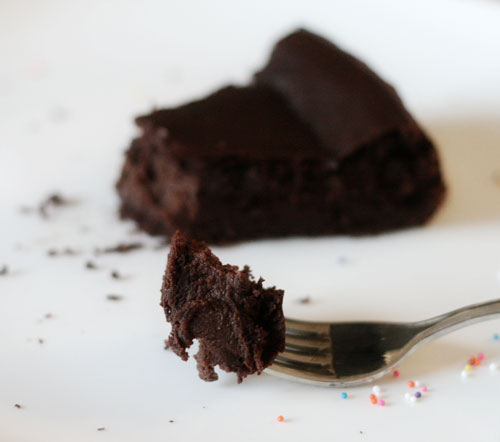
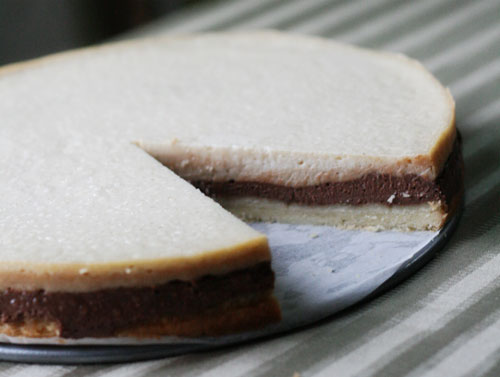
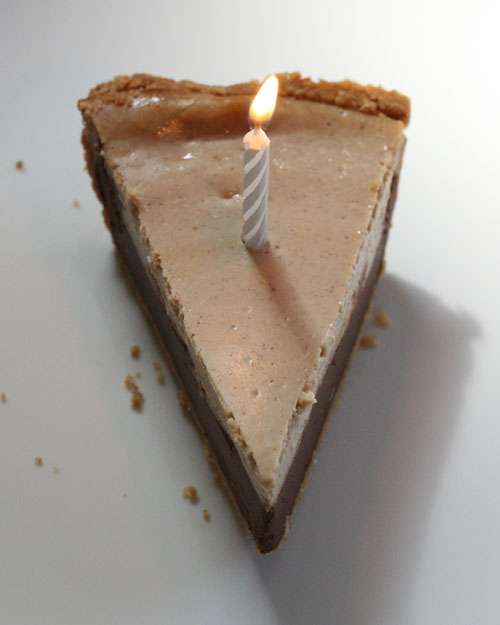
Look at this cheesecake. It doesn’t look vegan, and it certainly doesn’t taste it either. I can’t say it tastes like regular cheesecake, but let me tell you – it is so good you’ll forget you’re eating products that never came out of a cow. I’ve tried other vegan variations and they don’t even come close to the flavor and texture of this